What to Compare Before You Expand Capacity in a Brownfield Factory
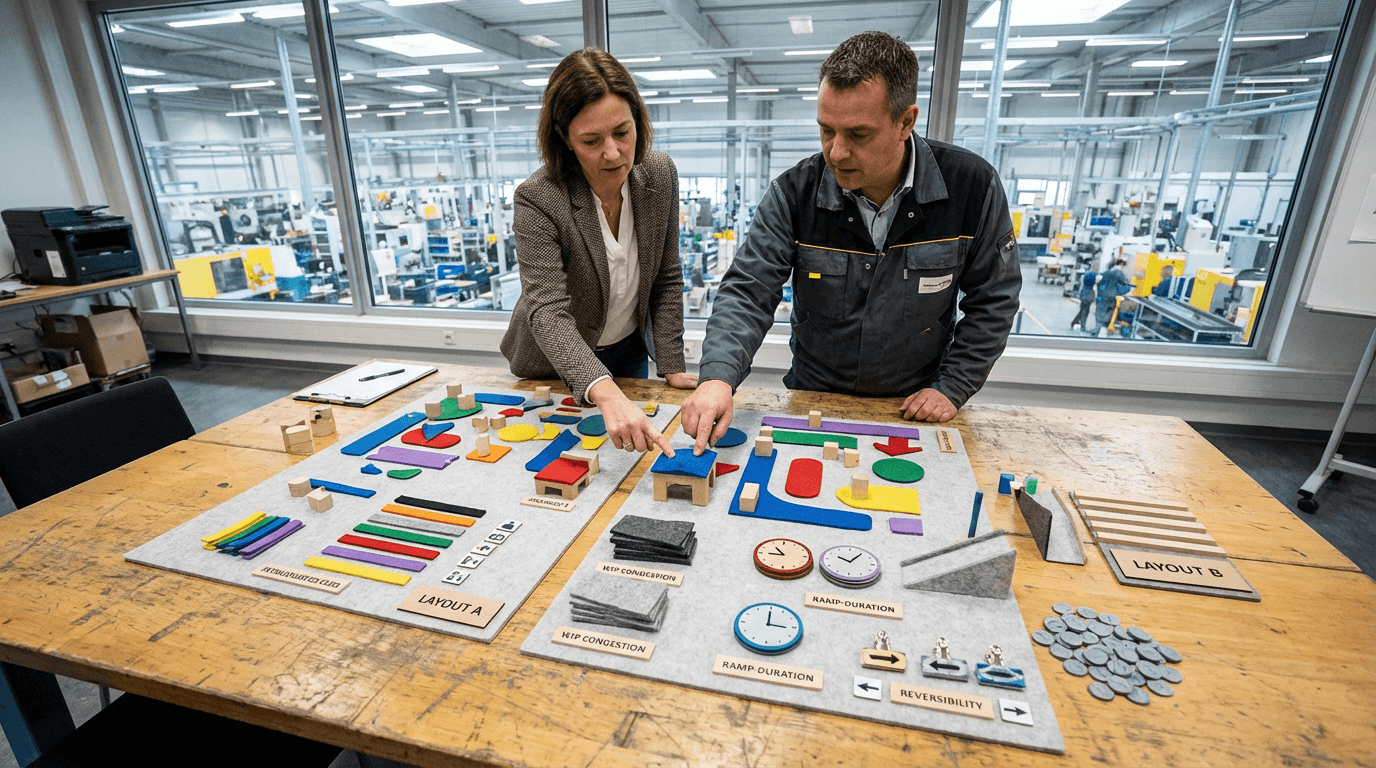
Why brownfield meetings collapse
Teams compress debate because space is tight and time is short. Compression hides a bottleneck that moves after the first fix, receiving or shipping stress the new island ignores, or a ramp that needs more indirect labor than finance modeled. Digital twin should hold multiple real brownfield paths in the same scenario frame so those risks cannot hide behind the easiest slide.
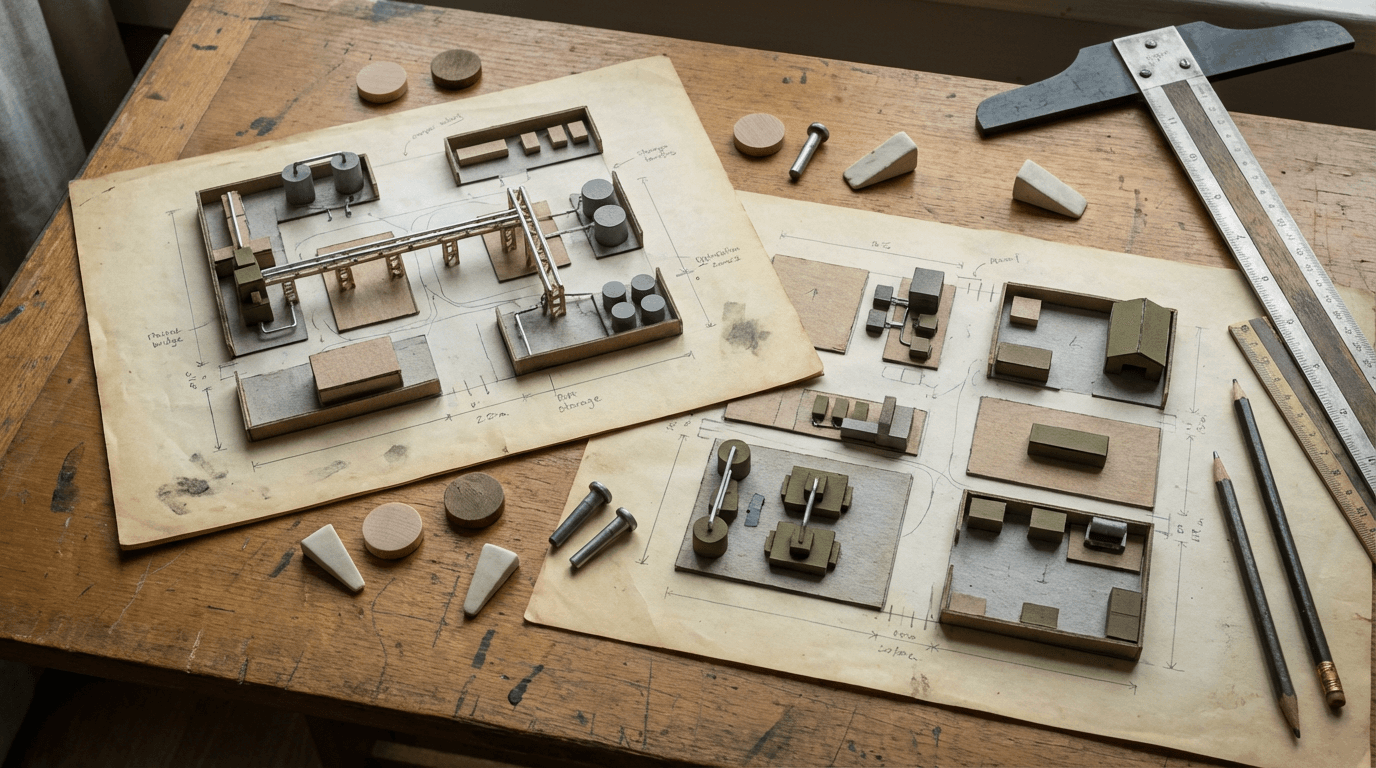
Seven dimensions to score
Constraint behavior under stress: where time accumulates when demand swings and suppliers slip. Intralogistics load: meters, touches, and handoff queues tied to the new footprint. WIP and congestion: floor space for buffers versus policies you will actually run. Mix and changeover sensitivity: whether the smooth-week winner loses in a volatile month. Ramp and stabilization: weeks to reliable rate with credible learning and quality curves. Cash and working capital: inventory and WIP timing—not only capex ticket price. Reversibility and modularity: cost to undo a wrong bet in a confined site.
Brownfield capacity scenario pack
Every option changes something physical or systemic you can name on a walk-through. The same shock set hits each option without custom optimism per path. Receiving and shipping sit inside the boundary if they constrain you today. Maintenance and tooling coverage is explicit for new assets. Procurement variability appears when inbound sets the pace.
When this works—and when it fails
It works when at least two credible paths exist and leadership accepts ranked trade-offs. It fails when regulation or fixed infrastructure removes real options, leaving only one feasible geometry.
From comparison to commitment
Simulation quality is not measured by how polished the scene looks; it is measured by whether a responsible executive can commit with a downside story they are willing to own. That requires frozen option sets, honest ranges, and stress paths that include the weeks nobody wants on a chart. It also requires a written trigger for partial reruns when scope shifts before spend lands.
If your organization struggles here, the fix is usually social, not technical: name the standard pack, refuse bespoke optimism per option, and publish kill notes when paths fail. Carry fewer, stronger scenarios into execution. The factory will still be hard; the difference is that you rehearsed the hard parts before concrete hardened them.
What DBR77 Digital Twin adds
DBR77 Digital Twin keeps multi-path brownfield comparisons under shared shocks, moving from manual inputs toward richer integration when sites need stable baselines: disciplined comparisons; bottleneck migration visible before steel or concrete moves; alignment between operations and finance on timing beyond the equipment quote.
Bottom line
Expand after comparing real paths—not slogans. If only one option survives scenario stress, you have clarity. If several survive, you can choose with open eyes.
DBR77 Digital Twin helps brownfield teams hold multiple physical paths in one scenario frame with shared shocks so bottleneck migration shows up before concrete moves. Book a demo or Browse use cases.
Want to see Digital Twin on your scenario?
Book a short demo — we'll show the fastest path to decision-grade outcomes.