Digital Twin for Workforce Optimization
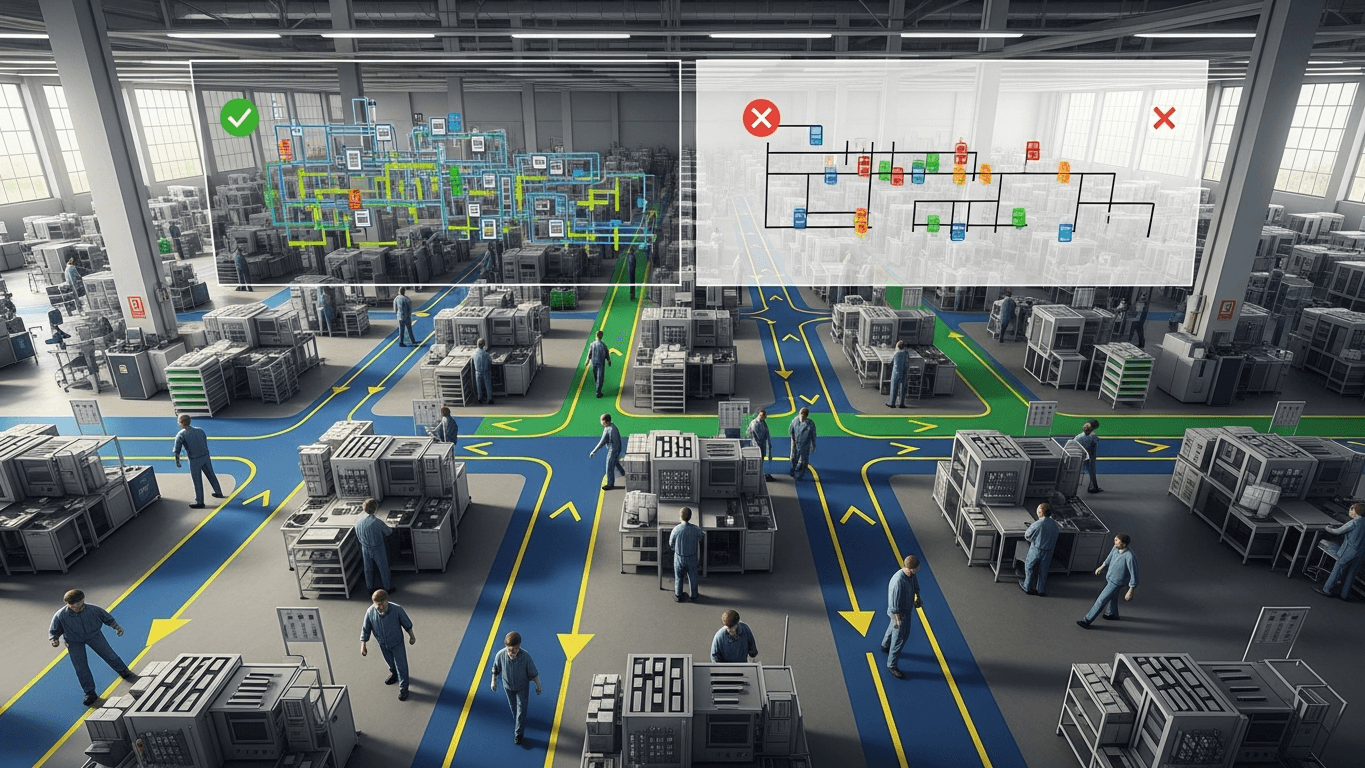
Why labor decisions are harder than they look
Changes that seem modest in isolation—one extra operator, a shift pattern tweak, work reassigned between areas—can reshape queue behavior, transport timing, handoff delay, and utilization balance. Workforce optimization cannot rely only on local judgment when the effect propagates through the network.
Labor reshapes the process
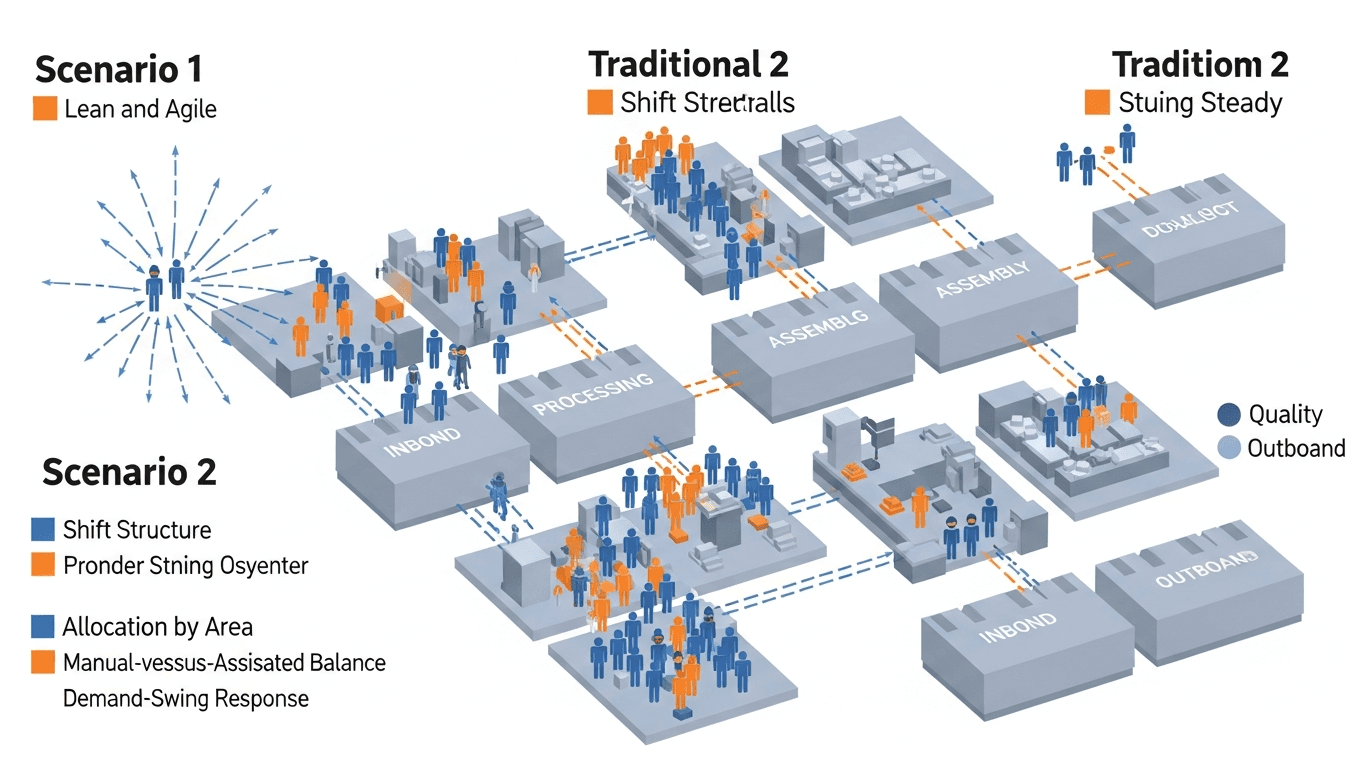
Factories often treat labor as an input to the process. In practice, labor configuration can reshape the process itself through task timing, material movement, waiting between stations, and response speed under variability. Weak staffing assumptions silently erode output even when the schedule looks balanced on paper.
What to test before change
Simulate different staffing levels, alternative shift structures, operator allocation by area, manual versus assisted task balance, and labor response under demand swings. The goal is to separate labor cost cuts from true labor optimization—configurations that stabilize flow versus ones that simply look cheaper.
Why earlier is cheaper
Once shift rules or staffing moves are implemented, correction costs rise: slower ramp, morale tension, repeated rebalancing, weaker service. Testing scenarios earlier improves economics and execution quality because the factory chooses with eyes open.
Governance that fits real factory tempo
Good governance matches the plant’s clock. Monthly operations reviews should treat forward risk as a first-class citizen, not as an appendix when slides run long. Capital forums should treat scenario IDs and assumption grades as part of the approval artifact, not as a modeler’s footnote. Post-investment reviews should be able to find the baseline story that was funded and test whether reality diverged in ways that change the next tranche.
When ownership is clear—who maintains structure, who certifies floor truth, who signs scenario packs—refresh events stop being personal favors and become predictable maintenance. That is how digital twin survives turnover: the next steward inherits templates, packs, and ledgers instead of inheriting lore. If your program cannot survive a leadership change, it is still a project, not infrastructure.
What DBR77 Digital Twin adds
DBR77 Digital Twin makes workforce choices legible as flow outcomes—where people wait, walk, overload an island, or starve downstream under the same shocks used for layout work. Staffing and shift scenarios share variability policy with other decisions; outputs become records you can reopen when the next labor debate starts. That replaces FTE counting alone with tested system behavior.
Bottom line
Workforce optimization is not only about lowering labor cost. It is about configuring people inside the operating system in a way that supports throughput, flow, and resilience. Workforce decisions should be simulated before they are imposed on reality.
DBR77 Digital Twin helps manufacturers test workforce scenarios against realistic flow behavior before staffing and shift decisions create hidden operating cost. Book a demo or Browse use cases.
Want to see Digital Twin on your scenario?
Book a short demo — we'll show the fastest path to decision-grade outcomes.