From Manual Inputs to Live Data: A Practical Digital Twin Roadmap
What “good enough” looks like by phase
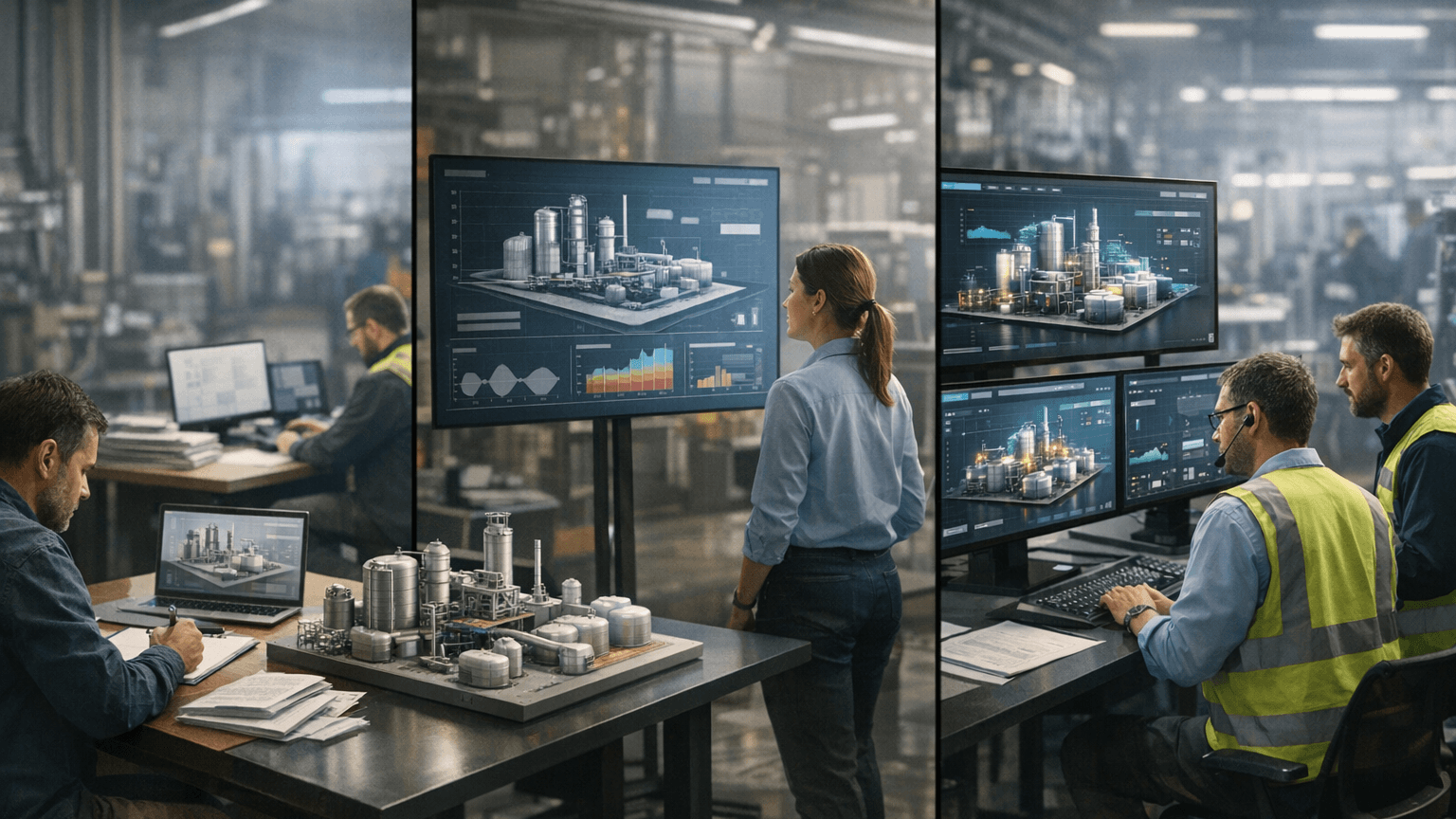
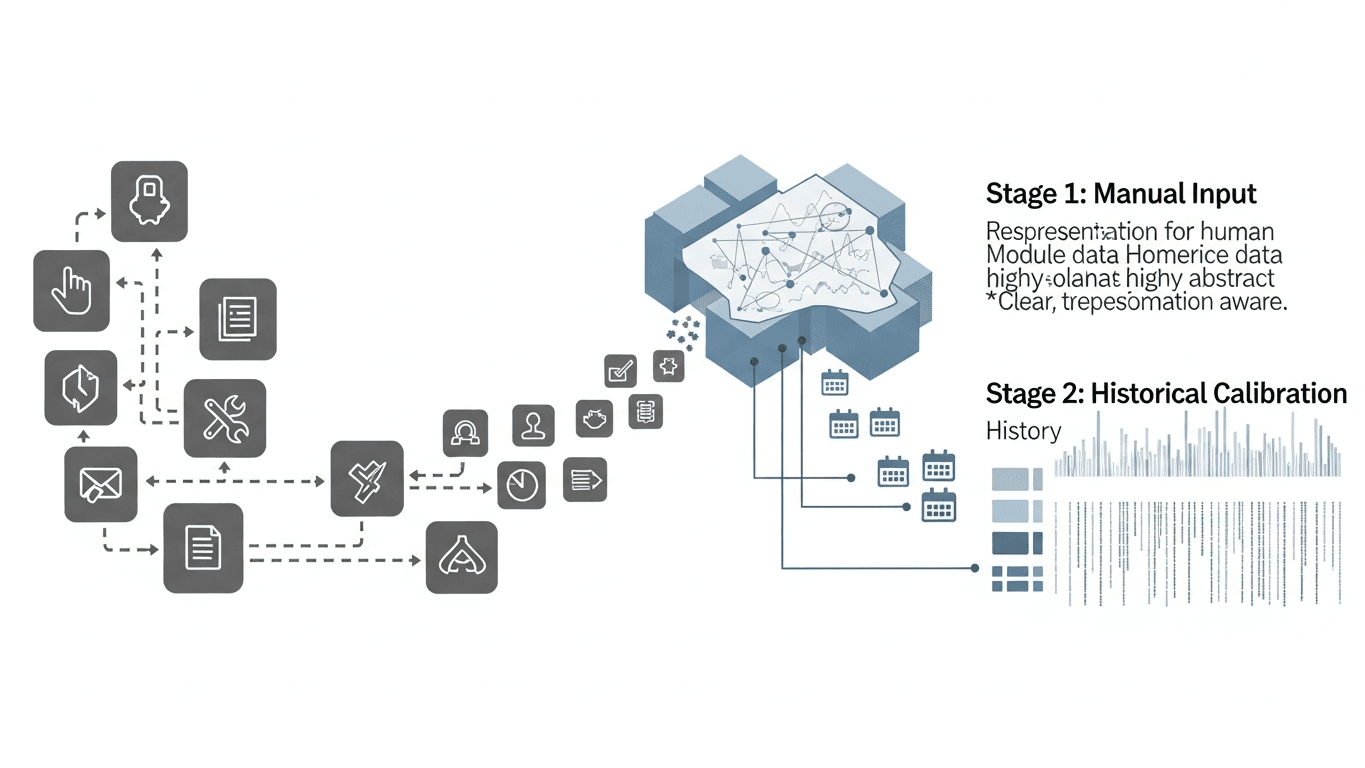
Think in phases, but name them for decisions, not for technology vanity. Early on you need a decision skeleton: process sequence, ranges for cycle and changeover, stated staffing rules—enough to compare two or more layout or flow variants and see bottleneck and queue behavior without hiding assumptions. Advance when two options have been compared under the same demand cases with explicit ranges.
Historical calibration comes next: event traces, actuals for key timings, failure and recovery from logs—so CAPEX and automation cases ground in observed variability rather than wishful points. Stop when model outputs pass a sanity check with operations owners who recognize a bad week when they see it.
Targeted live feeds follow when specific signals move constraint or replenishment truth—examples include WIP signals, key equipment states, selected logistics scans—paired with agreed owners for data quality and refresh. Sustained twin maturity is broader integration where ROI is clear and governance ties model updates to assumption ownership. Skipping a phase is fine when the plant already has the artifacts. Skipping the decision link is not.
Manual inputs are not a compromise when rules are honest
The risk of a manual start is rarely “manual data.” It is unowned assumptions that never receive ranges or review. Strong early practice names owners for each assumption class, uses min, expected, and max where variation drives queues, and includes demand cases with unfavorable mix—not only volume. That keeps early twins inside approval conversations instead of pilot silos.
Live data follows value
For each candidate signal, ask which scenario comparison improves if it is live, which approval would still proceed without it, and what breaks if the feed is wrong or late. The integration list that emerges is shorter and more defensible than “connect everything.”
Adoption that sticks
Progressive maturity works when stakeholders feel faster alignment, not only prettier models: the same shock vocabulary from concept through execution, retired options documented with reasons, model updates treated as change control when scope or mix moves. When the twin shortens circular debate before concrete moves, investment in deeper data finds a sponsor.
What DBR77 Digital Twin adds
DBR77 Digital Twin supports manual-to-live progression without forcing a big-bang integration program: scenario comparison first, richer inputs where they change decisions, human-approved use of outputs throughout. For IT/OT and operations jointly, it keeps the roadmap tied to gates and deliverables rather than to a disconnected connectivity roadmap.
Bottom line
The right path does not begin with perfect connectivity. It begins with the minimum truthful inputs needed to improve one class of decisions, then adds data only where the next approval or operating rhythm needs it. That is how a twin becomes durable infrastructure instead of a deferred transformation promise.
DBR77 Digital Twin supports a practical path from manual inputs to historical calibration to live data where it matters most. Book a demo or Explore Digital Twin.
Want to see Digital Twin on your scenario?
Book a short demo — we'll show the fastest path to decision-grade outcomes.