From Static Layout to Living Factory Model
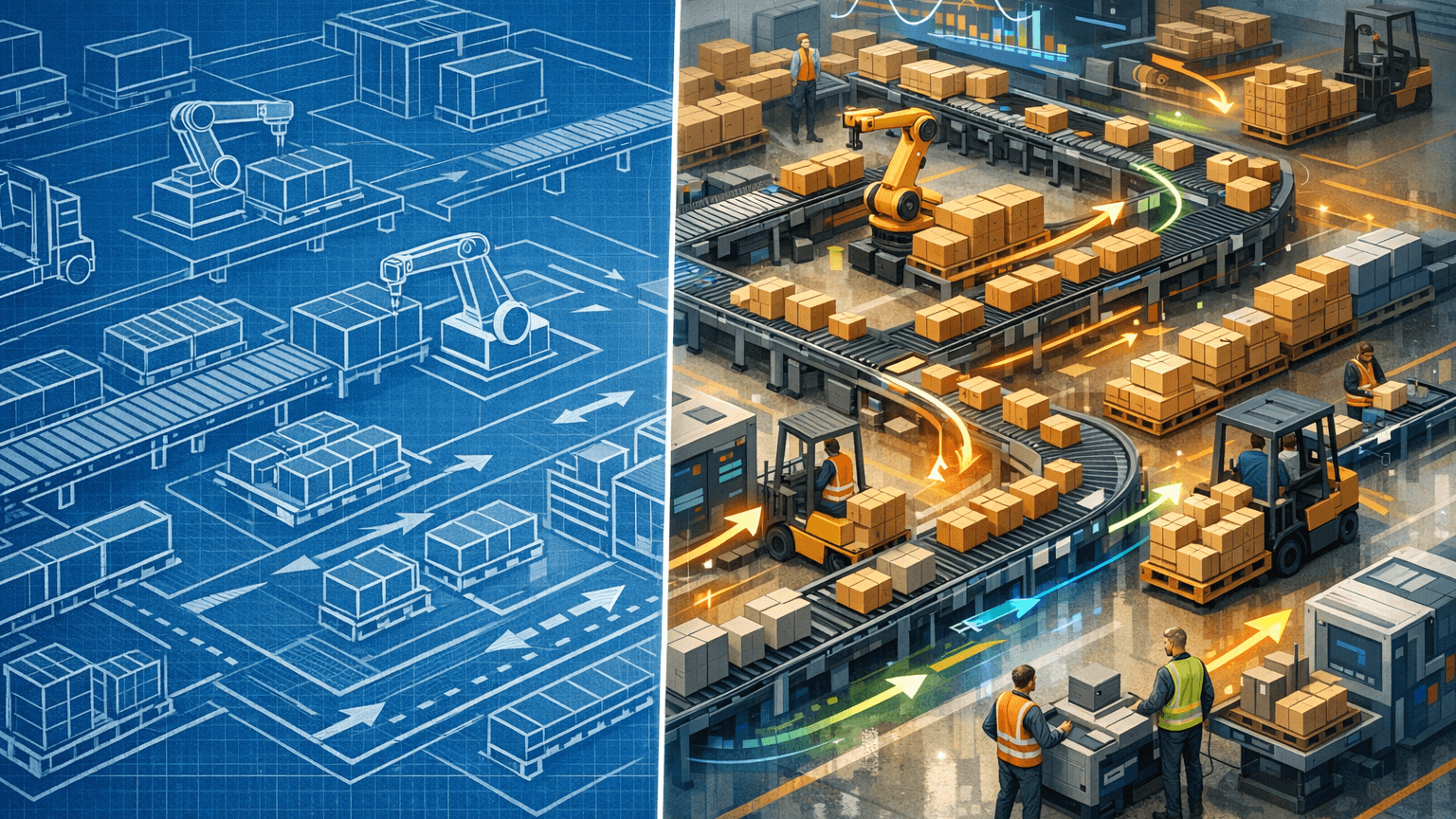
Space versus behavior
Floor plans help with placement, adjacency, footprint, and line sequence. Real performance also depends on movement paths, queue dynamics, buffer behavior, and variability under changing load. Those are system-behavior questions. When behavior stays out of the decision, layout work stays visually clear but operationally weak.
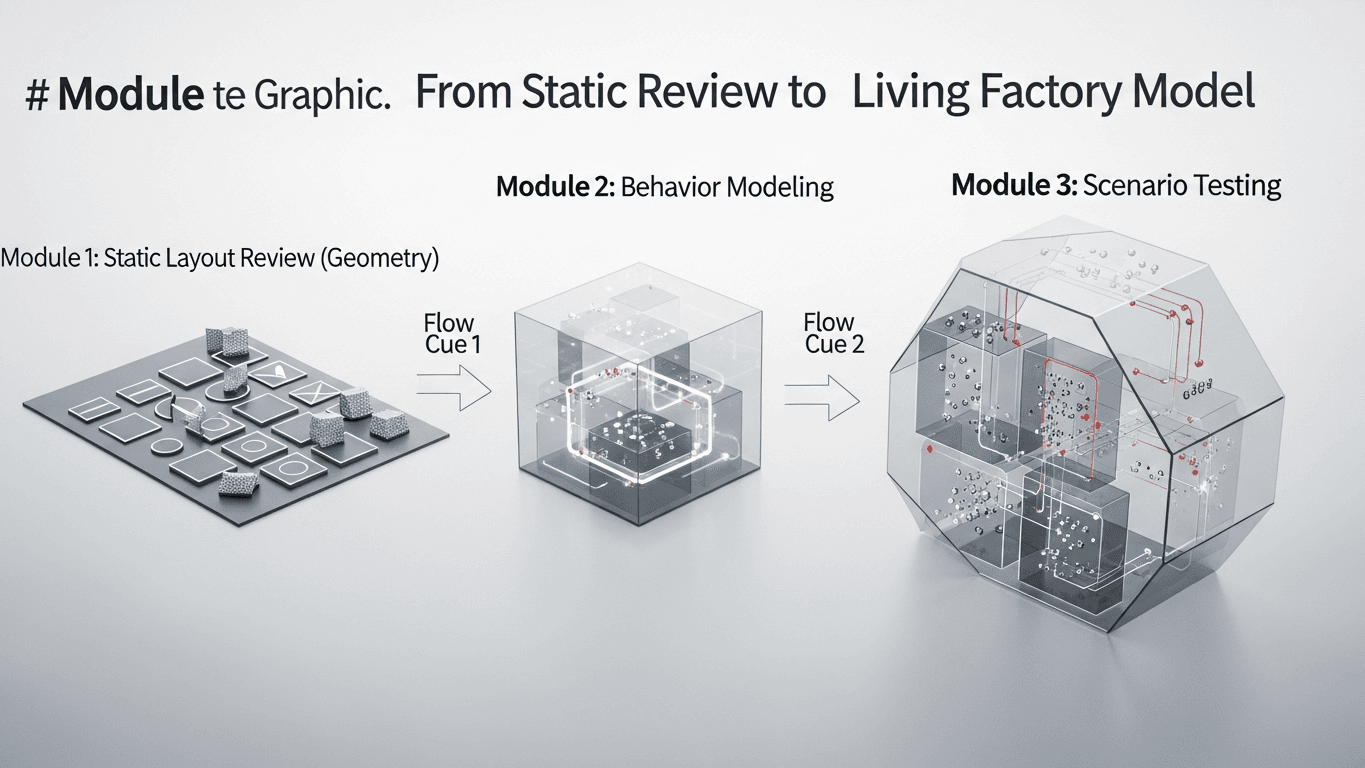
Why static thinking hits a ceiling
As operations grow more complex, teams need to know not only what the design looks like but how it performs, where delays emerge, what changes under demand swings, and which interactions create hidden waste. Without that, every improvement becomes a bet that the drawing’s implied story matches the floor.
What a living model changes
A living model reflects how the factory behaves under conditions that resemble real operation. Teams can test alternative layouts, routing variants, transport effects, staffing interactions, and scenario deviations. The conversation shifts from design preference to tested system logic.
Before physical change hardens
Once layout is implemented, correction is costly: rework, slower ramp, congestion that was missed, disappointing throughput. Better modeling before change improves speed and confidence because the organization chooses with behavioral evidence, not only spatial hope.
Ongoing infrastructure, not a one-off exercise
A living factory model supports recurring decisions: future variants, expansion paths, recurring flow issues, improvement priorities. That is how digital twin becomes operational infrastructure rather than a single project deliverable that ages in a folder.
From comparison to commitment
Simulation quality is not measured by how polished the scene looks; it is measured by whether a responsible executive can commit with a downside story they are willing to own. That requires frozen option sets, honest ranges, and stress paths that include the weeks nobody wants on a chart. It also requires a written trigger for partial reruns when scope shifts before spend lands.
If your organization struggles here, the fix is usually social, not technical: name the standard pack, refuse bespoke optimism per option, and publish kill notes when paths fail. Carry fewer, stronger scenarios into execution. The factory will still be hard; the difference is that you rehearsed the hard parts before concrete hardened them.
What DBR77 Digital Twin adds
DBR77 Digital Twin supports layout and flow variants under realistic load without treating every question as a full redraw exercise. Reopen the same behavioral backbone when the next expansion or routing tweak appears; keep CAD in its lane while decisions ride on tested flow logic. Layout intelligence survives the weeks after go-live, not only the approval meeting.
Bottom line
Factories should not have to learn the real behavior of a layout only after physical change. The stronger path is to build a living model early enough to test how the system behaves before reality becomes the most expensive teacher.
DBR77 Digital Twin helps teams move beyond static layout confidence by testing how real flow behaves before physical changes are made. Book a demo or Browse use cases.
Want to see Digital Twin on your scenario?
Book a short demo — we'll show the fastest path to decision-grade outcomes.