How to Compare CAPEX Options When Every Scenario Looks Plausible

Why shared optimism creates false confidence
Spreadsheet base cases tend to share smooth ramps, stable mix, predictable supplier performance, and maintenance windows that always hold. When every option inherits the same rosiness, ranking becomes arbitrary. The factory needs a comparison that survives a bad quarter, not only a polite one.
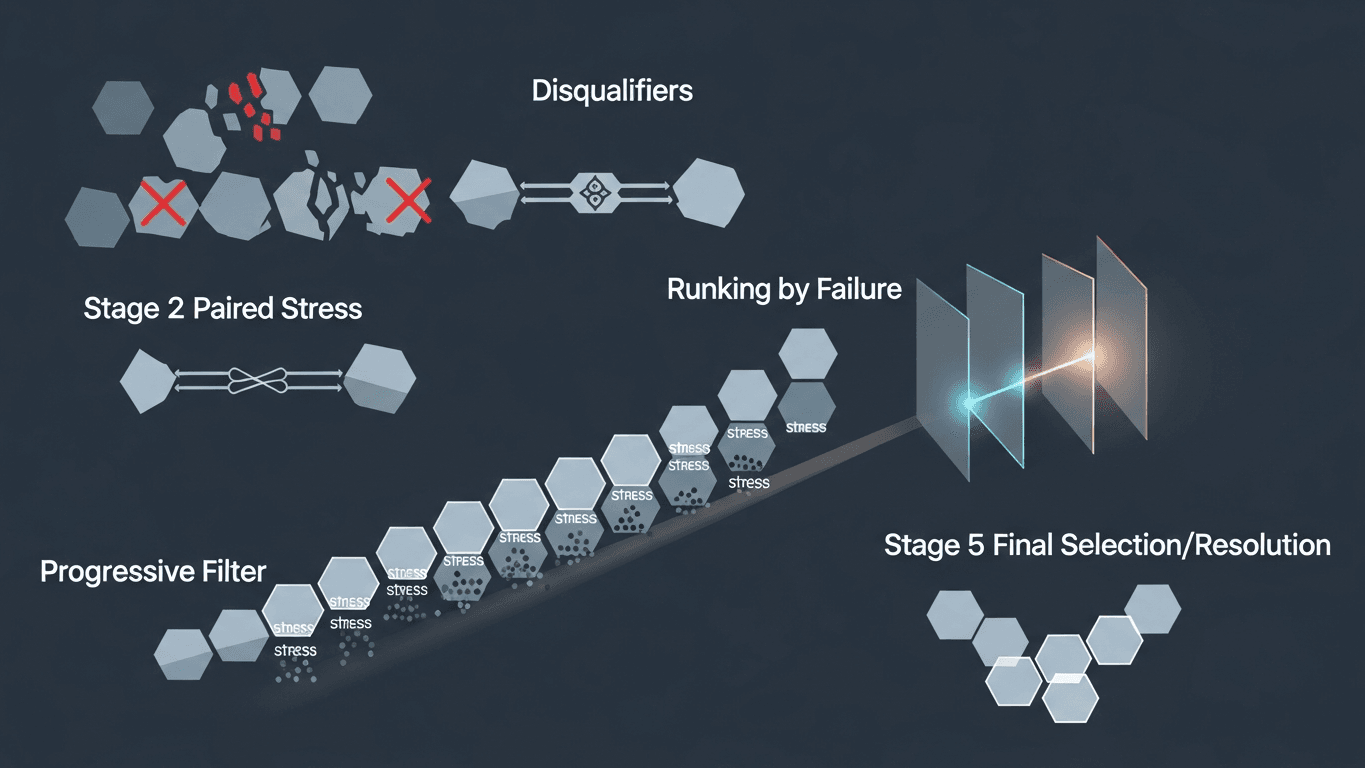
Compare failure modes, not slogans
Write the real decision being made—buy, build, retrofit, defer. List disqualifiers: operational or financial breaches that remove an option. Run paired stress tests with the same shocks and assumptions across every option. Measure asymmetry—which breaks earlier, costs more to recover, or locks the site longer. Choose the least-bad under stress when no option is perfect, and document why. That keeps the room focused on resilience, not narrative.
Stress cases that separate plausible paths
Include demand downside with simultaneous volume and margin pressure, mix shock toward the family distribution that hurts the specific investment most, supply disruption aligned to a credible historical band, labor constraints during ramp such as hiring lag or absenteeism, and coupled-site effects on shared utilities, tools, or logistics paths. An option that looks fine only when those shocks are ignored should lose early and quietly.
What to score for each path
Ask whether throughput at the true bottleneck improves or only relocates waiting; how cash timing compares for benefit versus outlay; whether spend can be staged or pivoted without sunk-cost traps; how operational fragility shows up under variability; and how expensive partial rollback would be if assumptions were wrong. Average ROI belongs in the packet; stress behavior belongs in the decision.
Decision hygiene when narratives collide
Use one model language across options—same units, cycle definitions, downtime policy. Name assumption owners across sales, operations, procurement, maintenance. Write invalidation triggers tied to measurable signals. Treat deferral as a real option so teams do not over-invest in looking decisive.
From comparison to commitment
Simulation quality is not measured by how polished the scene looks; it is measured by whether a responsible executive can commit with a downside story they are willing to own. That requires frozen option sets, honest ranges, and stress paths that include the weeks nobody wants on a chart. It also requires a written trigger for partial reruns when scope shifts before spend lands.
If your organization struggles here, the fix is usually social, not technical: name the standard pack, refuse bespoke optimism per option, and publish kill notes when paths fail. Carry fewer, stronger scenarios into execution. The factory will still be hard; the difference is that you rehearsed the hard parts before concrete hardened them.
What DBR77 Digital Twin adds
DBR77 Digital Twin is tuned for CAPEX option reviews that must survive shared downside shocks, not slide optimism: align finance and operations on the same stress cases; expose hidden bottlenecks and coupling before spend; produce decision records that survive later scrutiny.
Bottom line
When every CAPEX scenario looks plausible, stop debating slides and start comparing how options fail under the same shocks. The best capital decision is often the one that remains acceptable when the base case is wrong.
DBR77 Digital Twin gives capital sponsors a shared scenario layer so plausible CAPEX stories are tested with the same shocks and trade-offs. Book a demo or Browse use cases.
Want to see Digital Twin on your scenario?
Book a short demo — we'll show the fastest path to decision-grade outcomes.