How to Use Digital Twin for Factory Change Governance

What typical change packets omit
Packets often include scope, cost, and risk category. They rarely include which throughput and queue effects were explored, how supplier variability was represented, whether the change shifts the bottleneck under stress, or what new facts should trigger a model refresh. Digital twin closes that gap when treated as a decision system—not a three-dimensional showcase.
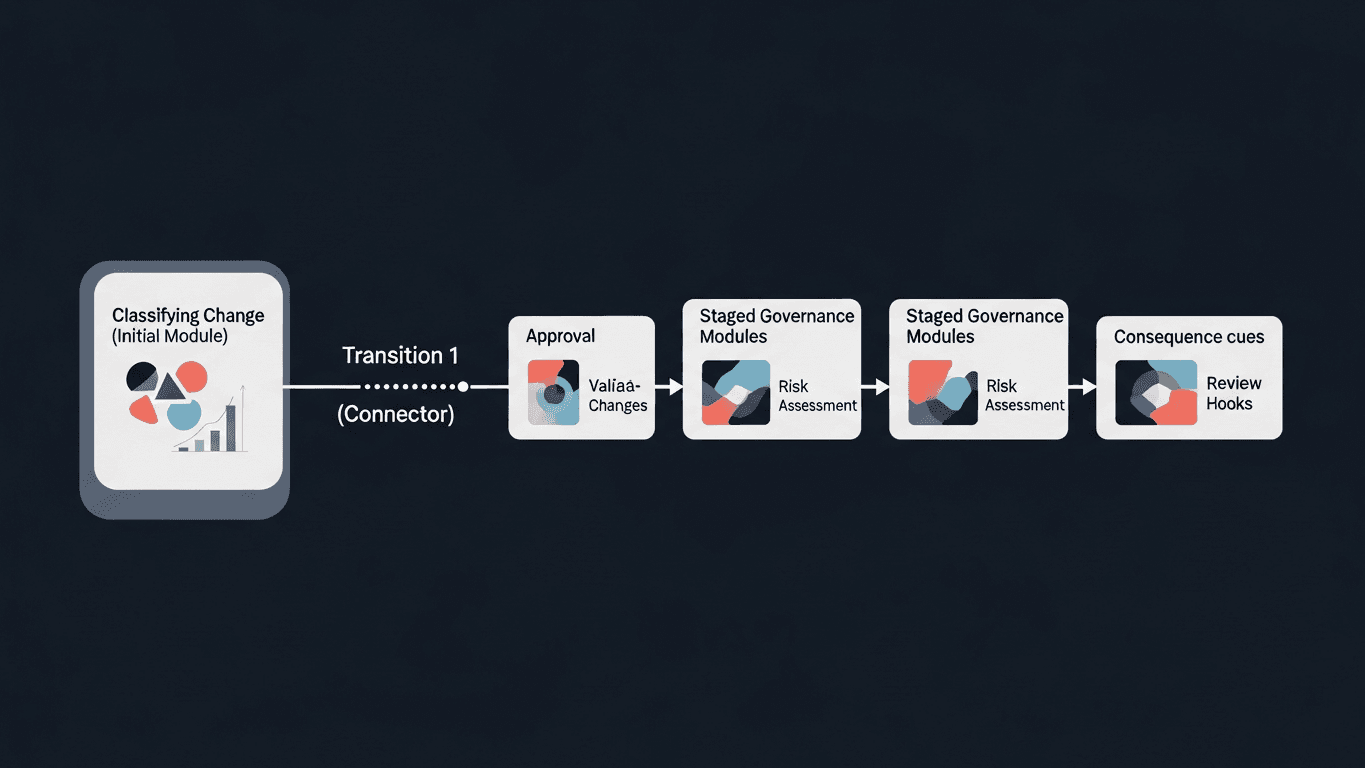
Embed simulation in the change record
Classify the change: material if it moves constraints, capacity, or handover paths. Freeze a scenario lens—demand band, supplier behavior assumptions, staffing model for the decision window. Run paired options: current versus proposed under the same shocks. Attach a summary with ranking, trade-offs in operations language, and an assumption ledger excerpt. Set review hooks—date and metrics that confirm or reopen the scenario. If the change is material and paired runs are missing, the record is incomplete.
Governance-ready attachment
Two functions can explain the operational trade-off without opening the model. Finance sees timing effects when cash or inventory moves. Maintenance and quality see handover and congestion risks in stress. Procurement acknowledges exposure when inbound variability matters. The change owner accepts invalidation triggers tied to live signals.
When this works—and when it fails
It works when the organization respects a change authority and can add one attachment field without drama. It fails when every change is treated as trivial until the line stops—governance has no gate to enforce. For director-level evidence packaging, use the board-level simulation evidence article in this series.
Executive discipline without slowing the line
The goal is not more meetings; it is fewer surprises. A disciplined twin rhythm means the expensive conversations happen early, when options are cheap, and the later forums validate decisions that already survived a standard pack. Executives should experience simulation as a narrowing machine: it retires weak paths with evidence, clarifies what must be verified before cash moves, and forces owners to name what would invalidate the plan.
Treat sensitivity and stress as part of capital hygiene, not as a specialist hobby. If a ranking flips under plausible bands, leadership should see that flip before signatures land—otherwise the organization discovers it during ramp. If a ranking is stable but fragile under disruption stories, that fragility belongs in the memo as a managed risk, not as a private worry for operations. Digital twin is strongest when it makes those tensions visible while you still have room to sequence work, stage cutovers, or adjust buffers without heroics.
What DBR77 Digital Twin adds
DBR77 Digital Twin anchors scenario summaries and assumption ownership to change records, with a path from manual inputs to richer integration as sites scale the pattern: standardize how summaries attach; keep comparisons consistent across teams and sites; preserve traceability when assumptions drift after go-live.
Bottom line
Good governance is not more forms—it is clearer evidence at the moment of approval. If the change record cannot carry scenario consequence, the board is guessing.
DBR77 Digital Twin helps operations teams standardize scenario summaries and traceability so change governance sees the same shocks and trade-offs across functions. Book a demo or Browse use cases.
Want to see Digital Twin on your scenario?
Book a short demo — we'll show the fastest path to decision-grade outcomes.