How to Use Simulation for Continuous Improvement
Earlier learning, lower tuition
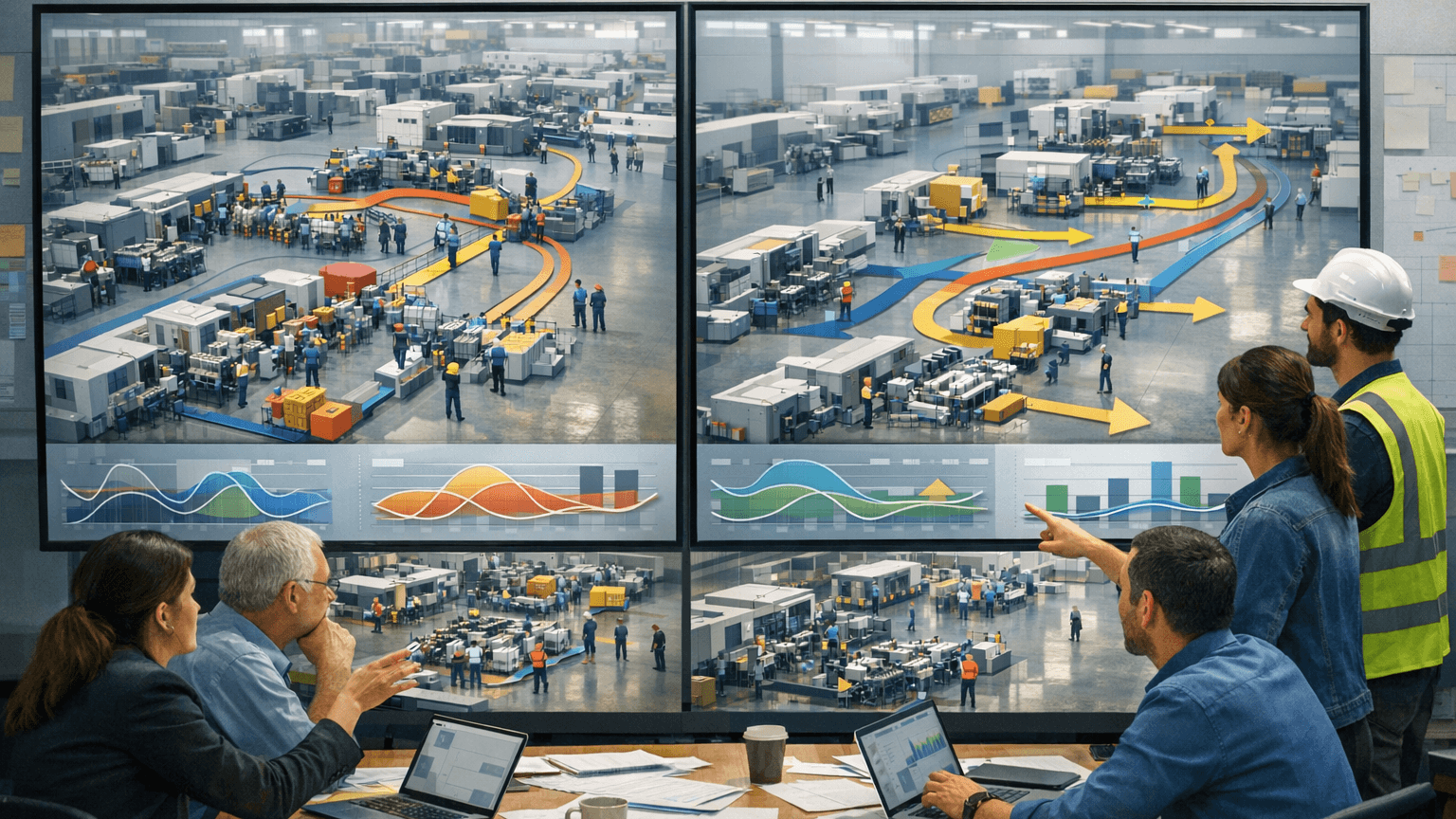
The goal of continuous improvement is not only to solve today’s problem but to improve how the organization changes. That becomes harder when validation depends on local trial and error, post-fact KPI review, and manual debate over likely impact. Those methods can work; they are slower and less reliable than disciplined comparison under shared shocks.
Small ideas, system effects
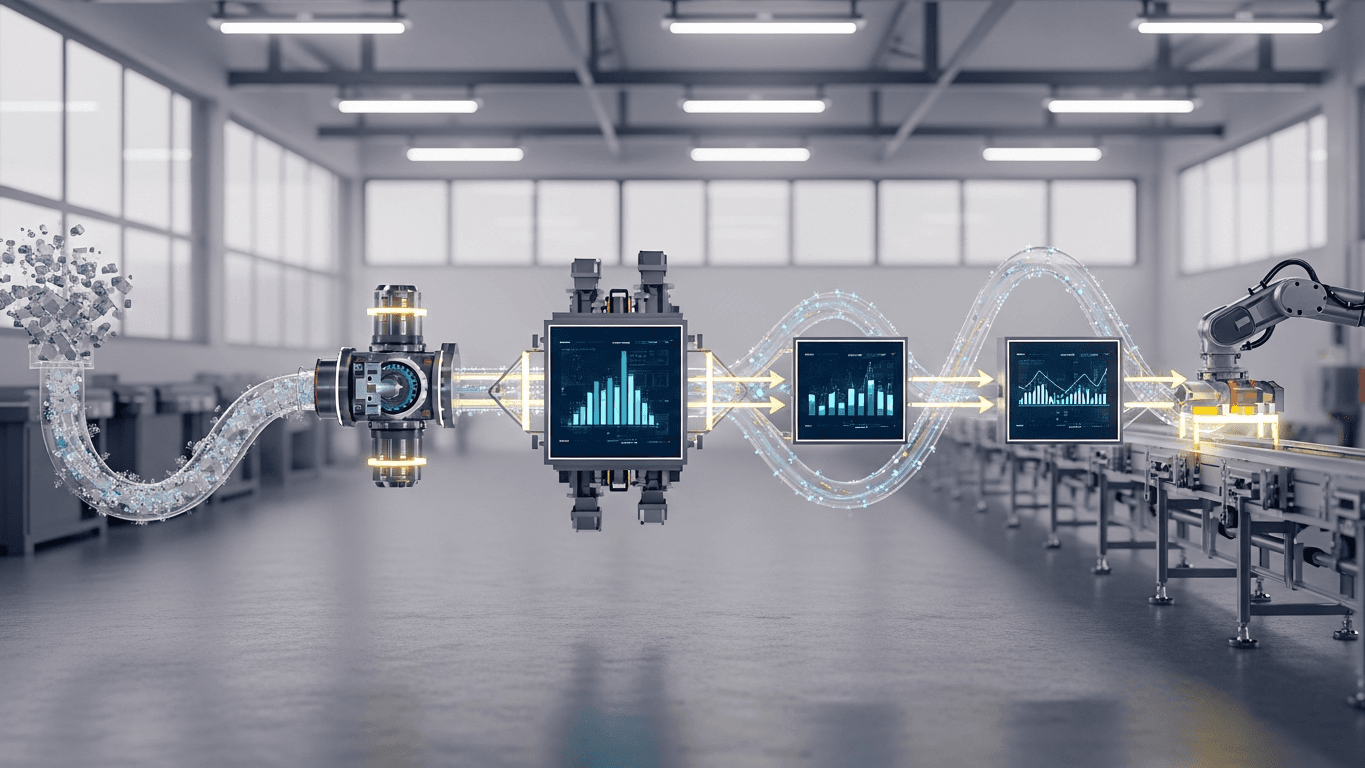
An improvement may look simple—move a buffer, change a route, reassign work, adjust staffing—but in operation it can alter waiting patterns, bottleneck location, labor movement, and throughput stability. Improvement should be tested as system behavior, not only as local intent.
Discipline without bureaucracy
Simulation gives teams a way to compare ideas before rollout: does this change help the whole flow, does the bottleneck move elsewhere, does the gain hold under variability, what downside hides in the preferred option? That turns continuous improvement from intuition-supported change into tested operating logic.
What CI leadership needs
Continuous improvement leaders need a repeatable way to prioritize stronger changes, reduce rework after implementation, align teams around one tested path, and build confidence in future initiatives. Simulation supports that outcome by making trade-offs legible before the floor absorbs them.
Compounding improvement
A common weakness is each project behaving like a fresh argument: debate, implement, discover side effects, repeat. A stronger model creates an environment where learning compounds across projects because assumptions, shocks, and comparison standards persist.
Brownfield honesty: compare paths, not slogans
Brownfield factories do not reward optimism; they reward comparability. Every serious path changes something physical—travel, staging, handoffs, maintenance access—and those changes interact under real demand and supplier behavior. Scenario work earns trust when each path faces the same shocks and the same evidence rules, so the conversation stays anchored to trade-offs instead of slide charisma.
Keep the discussion explicit about what you are not doing this cycle. Exclusions are as important as favorites; they prevent zombie options from returning with a new name. When post-change refresh triggers are understood, teams stop quoting last quarter’s certainty after the floor has already moved. The twin should make that drift embarrassing quickly, which is healthier than discovering it during a service miss or an overtime weekend nobody budgeted.
What DBR77 Digital Twin adds
DBR77 Digital Twin gives CI teams a shared shock set and comparison workflow so each wave stops resetting to a fresh argument: hypothesis-to-result traces CI leads and operations can audit; fewer live experiments because weak ideas fail in simulation first. Improvement becomes a repeatable operating rhythm, not a quarterly hero project.
Bottom line
Simulation belongs in continuous improvement because the strongest factory learning often happens before reality becomes the experiment. That is how improvement becomes faster, cleaner, and easier to scale.
DBR77 Digital Twin helps continuous-improvement teams test changes before rollout, so improvement becomes more repeatable and less dependent on costly live experimentation. Book a demo or Browse use cases.
Want to see Digital Twin on your scenario?
Book a short demo — we'll show the fastest path to decision-grade outcomes.