Why Factory Plans Often Break Under Real Flow and Variability

How planning builds false confidence
Simplification is necessary. The failure mode is treating averages and ideal routing as operational proof: single-point cycle times instead of ranges, stable staffing while actual lines flex across shifts, material flow drawn as steady while supermarkets and replenishment oscillate. Factories run through interaction. Static reviews underweight how constraints move when anything deviates from the base case.
What breaks after approval
Weak planning rarely announces itself in the decision meeting. It surfaces as slower ramp, throughput shortfall, buffer chasing, layout correction, and sponsor fatigue. That timing makes the error look like execution. Often it is an approval that never required the right shocks. The organization pays twice: once for the plan, once for the correction.
Simulation should challenge the plan
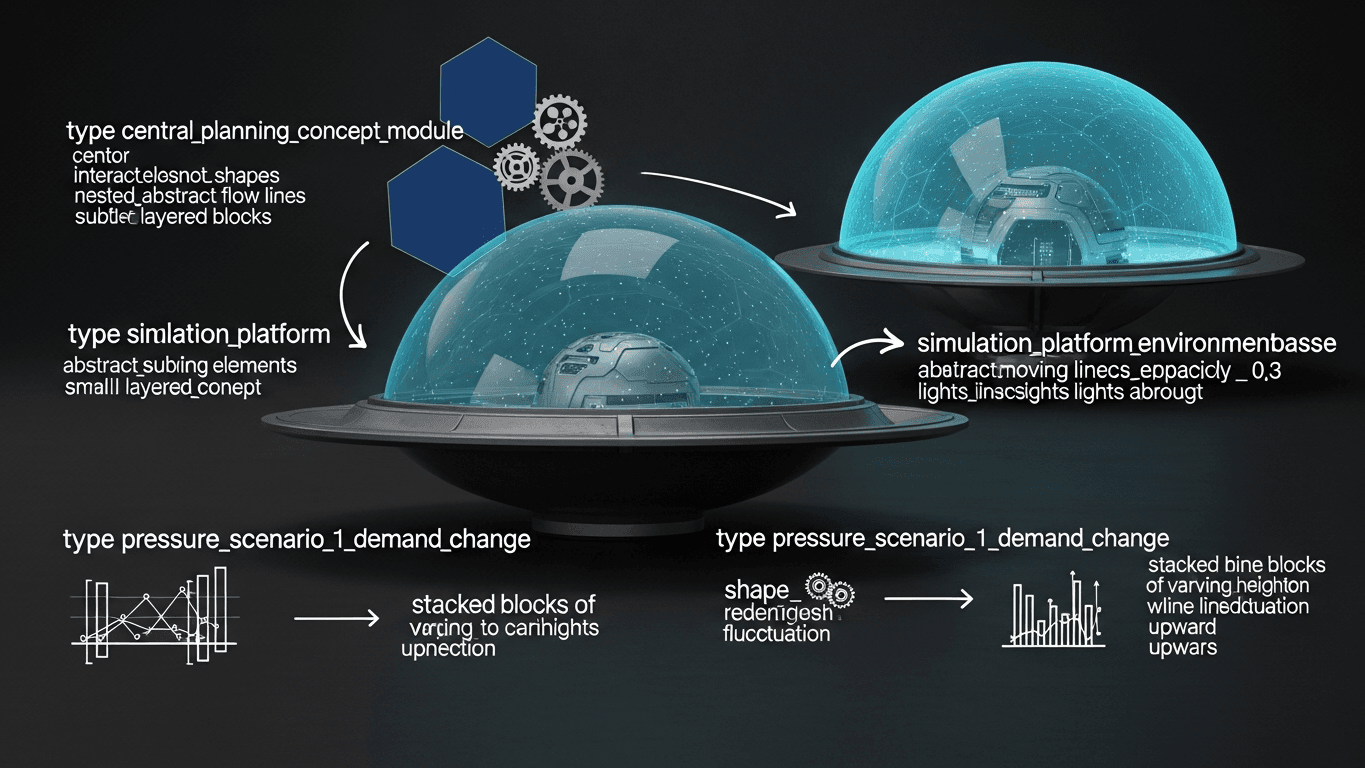
Useful twin work targets failure modes, not slide approval: demand up and down with the same staffing rules, key resources slowed or unavailable within stated recovery bands, path and handoff conflict under concurrent jobs, mix shifts that stress changeovers or batch breaks. When those runs belong in the pack, planning becomes decision-grade instead of narrative-grade.
What changes when assumptions face stress early
Teams that compare variants under a shared shock set can retire fragile options before spend, align operations, engineering, and finance on what “robust” means, reduce rework and stabilization drag, and explain residual risk explicitly instead of discovering it on the floor.
Governance that fits real factory tempo
Good governance matches the plant’s clock. Monthly operations reviews should treat forward risk as a first-class citizen, not as an appendix when slides run long. Capital forums should treat scenario IDs and assumption grades as part of the approval artifact, not as a modeler’s footnote. Post-investment reviews should be able to find the baseline story that was funded and test whether reality diverged in ways that change the next tranche.
When ownership is clear—who maintains structure, who certifies floor truth, who signs scenario packs—refresh events stop being personal favors and become predictable maintenance. That is how digital twin survives turnover: the next steward inherits templates, packs, and ledgers instead of inheriting lore. If your program cannot survive a leadership change, it is still a project, not infrastructure.
What DBR77 Digital Twin adds
DBR77 Digital Twin is built to compare planning variants under realistic deviation and progressive data maturity, so the organization stress-tests the case before layout and capital harden. The payoff is fewer surprises in ramp: the expensive arguments happen in the model while options are still cheap to change.
Bottom line
Plans fail less often because planning is useless than because the approval set did not include the operating conditions that actually arrive. Simulation earns its place when it is the standard for those conditions—not an optional illustration after the decision is already socialized.
DBR77 Digital Twin helps teams challenge planning assumptions before approval by comparing scenarios under more realistic operating behavior. Book a demo or Browse use cases.
Want to see Digital Twin on your scenario?
Book a short demo — we'll show the fastest path to decision-grade outcomes.