What a Factory Scenario Library Should Look Like After the First Projects

Version one structure
Include a base case: the agreed operating story for normal planning cycles. Add peak and recovery: demand spikes plus the ramp story you actually believe. Maintain a constraint-shift set for bottleneck moves you fear after the next change wave. Keep supplier and inbound variants aligned to behavior you have seen before. Include kill scenarios—stories that should disqualify weak layout options early. Each entry carries owner, last refresh event, and links to assumption ledger fields it depends on.
Taxonomy that survives handovers
Tag by decision type—CAPEX, footprint, staffing, seasonal, disruption—horizon—next quarter, next ramp, next fiscal year—and evidence grade: verified, illustrative, or hypothesis. Hypothesis scenarios are allowed; they must be labeled so they never masquerade as audited truth.
Library health after project two or three
Every major approval references a scenario ID—not only a slide title. The standard stress pack reruns on structural change per governance rules. New scenarios fork from a dated base rather than mutating silently. Finance can open the library and see ranges, not only point outputs. Operations knows which scenario answers which recurring meeting question.
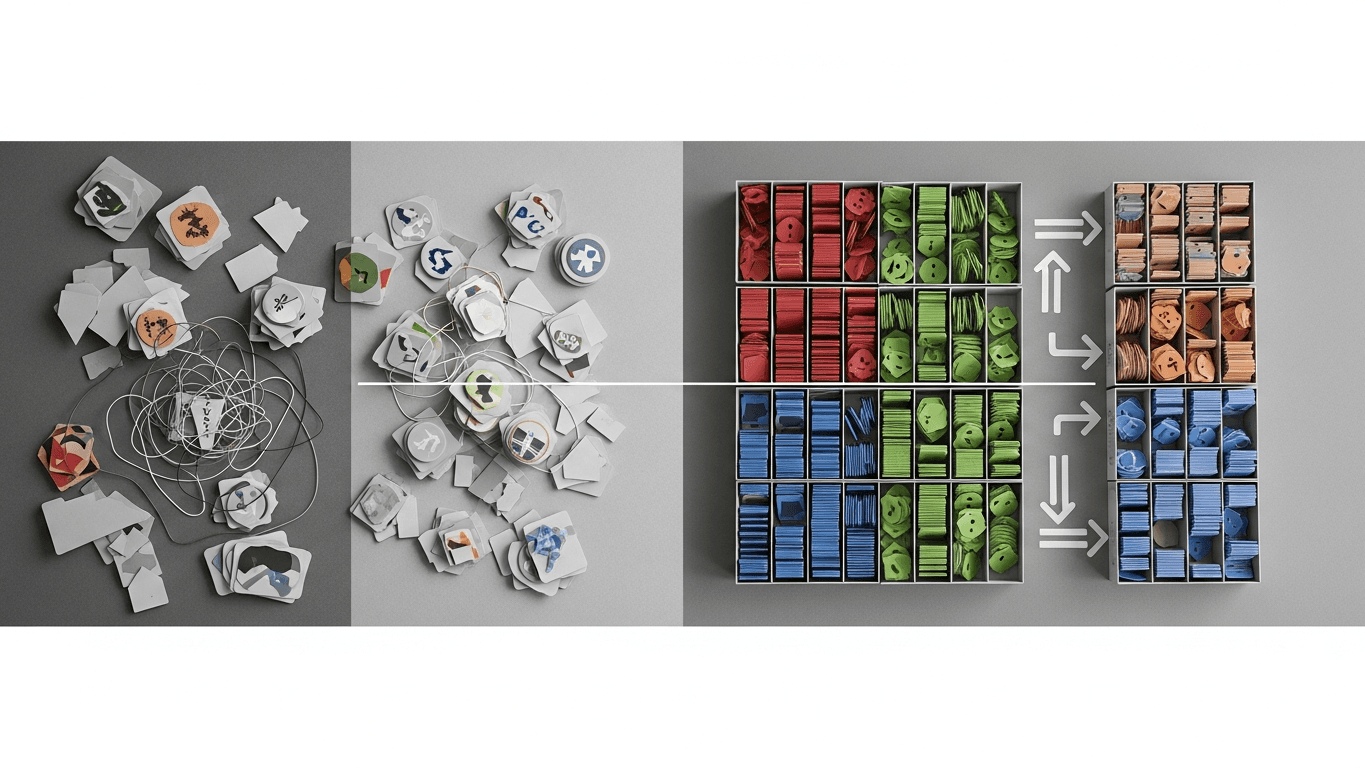
Folder chaos versus library discipline
Ad-hoc exports in email produce untraceable decisions. Shared drives without IDs breed duplicate conflicting models. Tagged libraries with snapshots enable comparable before-and-after reviews. Scenarios tied to gate memos produce audit-friendly capital stories.
What should feel different on Monday
Teams rarely fail because they lack intelligence; they fail because the next meeting repeats the same questions with fresher anxiety. When simulation work is wired into how you decide, Monday shows up with fewer circular arguments about whether a layout "ought to work." Instead, you carry a short list: which option survived the same stress vocabulary, which assumptions still carry hypothesis labels, and what would force you to rerun the pack before the next tranche. That is the practical face of governance—not a heavier process, but a clearer receipt for why the floor should trust the plan.
For capital and footprint choices, the receipt matters as much as the ranking. Approvals should be able to point to scenario identity and ranges without opening a model. If executives cannot explain the downside story in plain language, the organization is still buying animation. If operations cannot recognize the staffing and flow assumptions embedded in the memo, the twin is still a slide, not a decision system. Use the next leadership block to test whether the narrative is portable: could someone not in the room defend the choice from the packet alone? If not, tighten the assumption ledger and the executive summary before you ask for more money or more floor space.
What DBR77 Digital Twin adds
DBR77 Digital Twin supports practical scenario comparison and a path from manual inputs toward richer integration—making a disciplined library easier to sustain across projects.
Bottom line
After the first wins, invest in cataloguing. The next decision should feel like reuse with evidence—not a fresh science fair.
DBR77 Digital Twin fits teams that want comparable scenario packs across projects instead of one-off model exports. Book a demo or Browse use cases.
Want to see Digital Twin on your scenario?
Book a short demo — we'll show the fastest path to decision-grade outcomes.