What to Simulate Before Expanding a Production Line

Why strong CAPEX memos still miss the floor
A polished expansion packet can still omit how WIP and queues redistribute when the new segment starts, whether the bottleneck migrates upstream or downstream, how changeovers interact once throughput rises, and whether material delivery, staging, or kitting becomes the hidden limiter. Those gaps become expensive after steel is poured and contracts are signed.
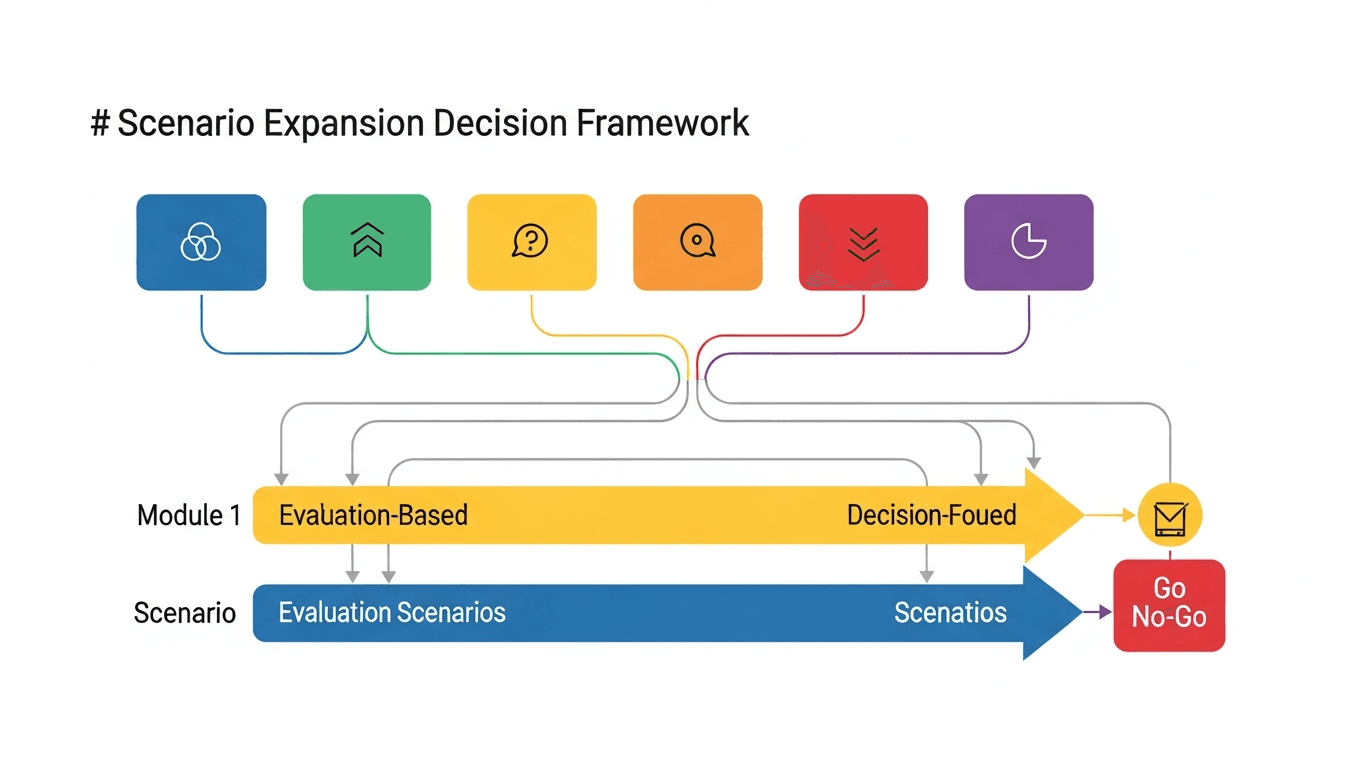
Minimum scenario set
Run baseline today including bad weeks, not only averages; target throughput band as a range leadership wants to support; mix stress for the family mix that hurts cycle and changeover most; ramp case with honest training, scrap, and stability assumptions; coupled resources such as shared tools, testers, cranes, AGV loops, or relief staffing both lines touch. You are comparing how the system fails, not decorating a success story.
Score serious variants on the same facts
Judge options on throughput at the true bottleneck under stress, WIP and queue time at top constraints, overtime and temp labor exposure, time to stable output after go-live, and sensitivity to inbound delay when logistics sets the pace. If two variants look close on average but diverge under stress, stress is the truth you need before spend.
Inputs leadership should agree before the model runs
Align on the decision sentence (what exactly is being chosen), demand shape owned by sales and planning, the constraint list that cannot flex in the first ninety days after start-up, and the failure definition—what KPI breach disqualifies an option. Without those agreements, the model becomes a Rorschach test.
Isolated line models lie politely
Modeling the new line alone feels clean and often misleads. If the expansion steals indirect time, maintenance windows, or handling capacity from the rest of the site, the plant learns during ramp—not during the approval meeting. Keep the boundary honest.
Brownfield honesty: compare paths, not slogans
Brownfield factories do not reward optimism; they reward comparability. Every serious path changes something physical—travel, staging, handoffs, maintenance access—and those changes interact under real demand and supplier behavior. Scenario work earns trust when each path faces the same shocks and the same evidence rules, so the conversation stays anchored to trade-offs instead of slide charisma.
Keep the discussion explicit about what you are not doing this cycle. Exclusions are as important as favorites; they prevent zombie options from returning with a new name. When post-change refresh triggers are understood, teams stop quoting last quarter’s certainty after the floor has already moved. The twin should make that drift embarrassing quickly, which is healthier than discovering it during a service miss or an overtime weekend nobody budgeted.
What DBR77 Digital Twin adds
DBR77 Digital Twin centers expansion decisions: throughput, flexibility, inventory, and ramp risk in one comparable frame before spend locks. Side-by-side testing of credible variants under variability; trade-offs between throughput, flexibility, inventory, and ramp risk; decision records finance and operations can align on without slide optimism.
Bottom line
Simulate before expanding when shared resources, mix, or ramp risk can overturn a CAPEX story that looks fine as a static case. If the expansion is a true duplicate cell with isolated logistics and stable mix, measurement-led pilots may move faster. The goal is fewer surprises when spend turns into concrete.
DBR77 Digital Twin helps teams compare expansion variants under variability and shared-resource coupling before physical and supplier commitments harden. Book a demo or Explore Digital Twin.
Want to see Digital Twin on your scenario?
Book a short demo — we'll show the fastest path to decision-grade outcomes.