When a Factory Should Simulate Before It Reconfigures Flow
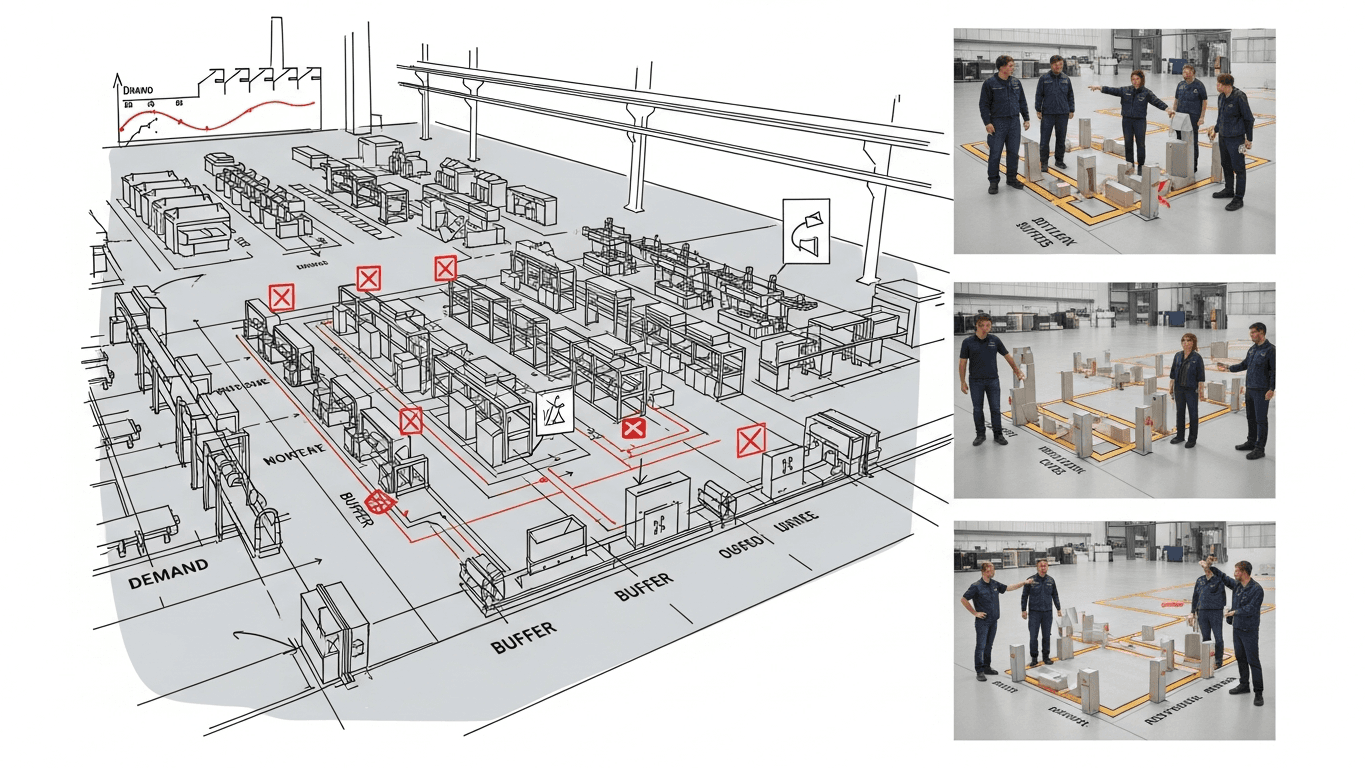
Drawings are not behavior
CAD and layout prints answer geometry. They do not reliably answer where queues form when variability returns, how a small move shifts the system constraint, whether a faster local step starves upstream, or how changeovers propagate through merges. In this context a digital twin is not a three-dimensional showcase; it is a decision system that tests flow logic before spend.
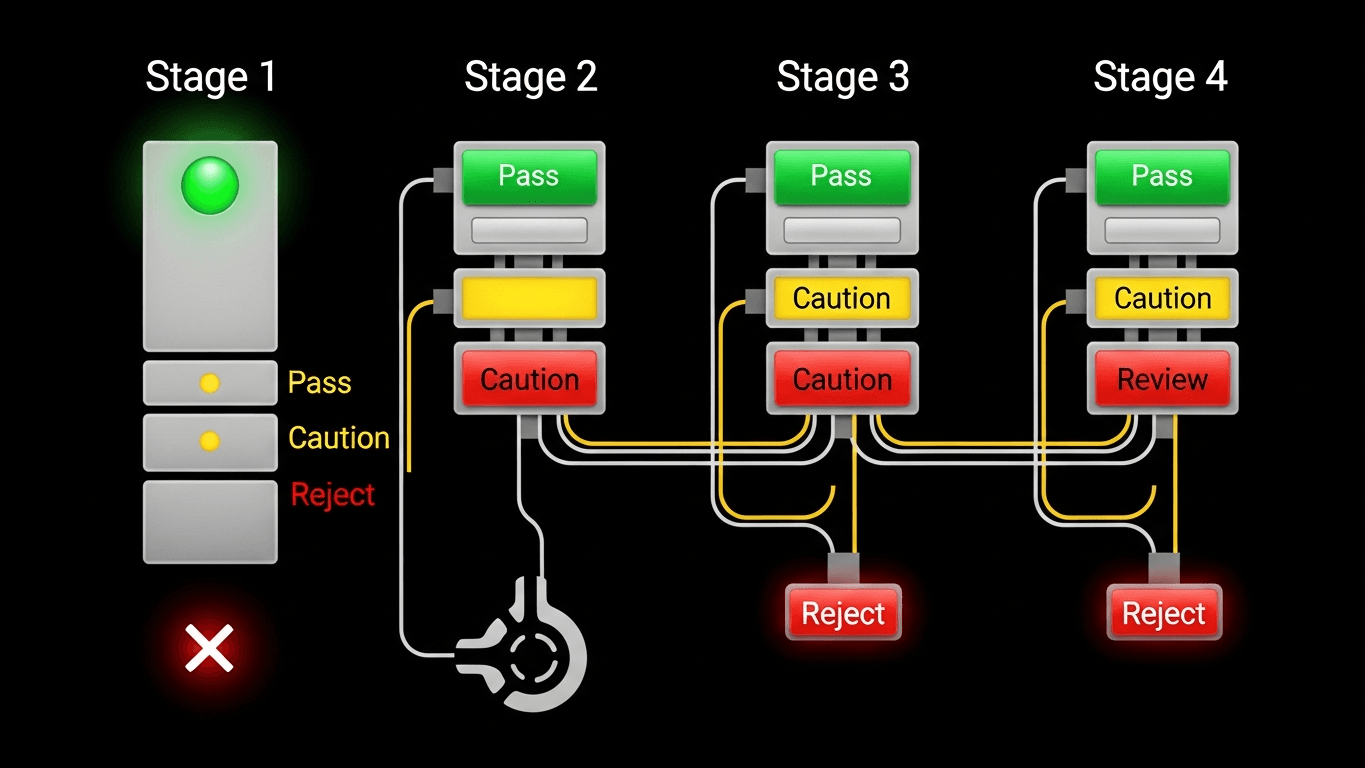
What “good enough” inputs look like
You do not need live MES feeds to earn value. You usually need a credible process sequence with realistic cycle time ranges; changeover and failure assumptions stated as ranges, not single points; demand or order mix scenarios that reflect peak and slump; staffing rules that match how the line is actually run. Teams that skip ranges and run only average demand often approve flows that fail the first busy week.
What to compare
Run baseline current flow, proposed flow under expected demand, and proposed flow under stress demand or worst-case mix. Add a hybrid when politics matter—one that preserves an old buffer policy while changing layout—so debates do not collapse into false binaries.
When simulation should not block trivial change
Simulation is a risk tool, not a moral obligation. If the change is small, reversible in hours, and does not touch shared constraints, a documented pilot on a quiet shift may be faster than modeling. The mistake is applying that exception to changes that actually move system behavior.
From comparison to commitment
Simulation quality is not measured by how polished the scene looks; it is measured by whether a responsible executive can commit with a downside story they are willing to own. That requires frozen option sets, honest ranges, and stress paths that include the weeks nobody wants on a chart. It also requires a written trigger for partial reruns when scope shifts before spend lands.
If your organization struggles here, the fix is usually social, not technical: name the standard pack, refuse bespoke optimism per option, and publish kill notes when paths fail. Carry fewer, stronger scenarios into execution. The factory will still be hard; the difference is that you rehearsed the hard parts before concrete hardened them.
What DBR77 Digital Twin adds
DBR77 Digital Twin is built for scenario comparison and operational de-risking, not visual theater. For flow reconfiguration it helps teams compare variants, stress assumptions, and align operations and engineering on what “good” means before the floor becomes the test bench.
Bottom line
Simulate before reconfiguring flow when the change can move constraints or how work waits in the system. If it only changes appearance or local housekeeping, lighter governance is enough. If it changes behavior under variability, the twin is where the expensive arguments should happen.
DBR77 Digital Twin helps teams test flow variants and demand stress before reconfiguration spend locks in. Browse use cases or Explore Digital Twin.
Want to see Digital Twin on your scenario?
Book a short demo — we'll show the fastest path to decision-grade outcomes.