When to Refresh a Digital Twin Model After Operational Change

Trigger checklist
Refresh when the documented bottleneck moved or split; when average and peak WIP patterns shifted for two consecutive review cycles; when a capital project changed travel, storage, or handoff paths; when planning or procurement changed lead-time or lot behavior used in the model; when staffing or shift rules no longer match floor reality; when quality or rework drivers changed enough to alter effective throughput. One material box is enough to schedule a refresh. When the question is whether evidence is strong enough to fund, use the capital-readiness article alongside refresh discipline.
Disciplined refresh sequence
Freeze last known good outputs with date and decision context. List structural deltas since that date with owners per change. Update inputs with evidence bands—not wishful defaults. Re-run base and the standard stress set used in prior approvals. Publish a delta memo: what moved, what stayed stable, which decisions need reopening.
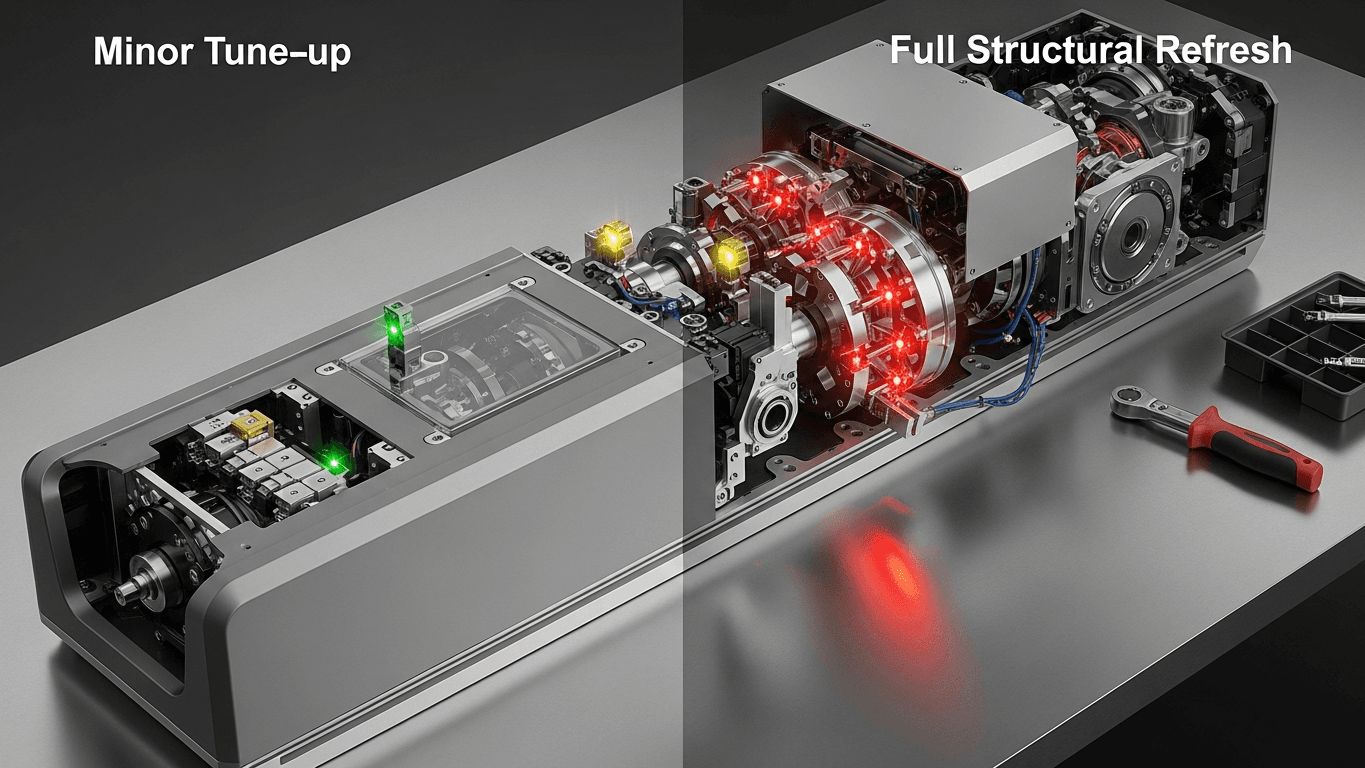
Cosmetic tweak versus structural refresh
Label or reporting-only changes may need documentation without structural refresh. Single parameters inside an agreed band may warrant a sensitivity note and optional partial rerun. Routing or resource logic changes need structural refresh with a new baseline. Post-CAPEX footprint changes need full refresh before the next major decision.
From comparison to commitment
Simulation quality is not measured by how polished the scene looks; it is measured by whether a responsible executive can commit with a downside story they are willing to own. That requires frozen option sets, honest ranges, and stress paths that include the weeks nobody wants on a chart. It also requires a written trigger for partial reruns when scope shifts before spend lands.
If your organization struggles here, the fix is usually social, not technical: name the standard pack, refuse bespoke optimism per option, and publish kill notes when paths fail. Carry fewer, stronger scenarios into execution. The factory will still be hard; the difference is that you rehearsed the hard parts before concrete hardened them.
Tie the story to what the floor can observe
Scenario outputs become operational when they reference behaviors people can see: where queues form, how staging fills, when overtime pressure shows up, which handoffs get brittle under mix shifts. If the narrative only speaks in abstract utilization, it will not survive first contact with a busy Tuesday. Translate the model’s language into walk-the-floor language before you ask teams to trust it.
That translation is also how finance and operations stay aligned. Cash and service effects should be traceable to those same observable behaviors, not only to a headline efficiency claim. When those links are explicit, governance gets lighter because everyone is arguing about the same mechanisms—not about competing metaphors.
What DBR77 Digital Twin adds
DBR77 Digital Twin treats refresh events and standard stress packs as part of model ownership, with manual inputs maturing into richer integration as the plant evolves: traceable refresh alongside project history; reusable stress sets so before-and-after comparisons mean something; shorter gap between physical change and trustworthy scenarios.
Bottom line
Treat refresh as governance, not housekeeping. If the plant moved and the twin did not, stop quoting last quarter’s certainty.
DBR77 Digital Twin helps model owners rerun standard stress sets after structural change so before-and-after comparisons and approvals stay trustworthy. Book a demo or Explore Digital Twin.
Want to see Digital Twin on your scenario?
Book a short demo — we'll show the fastest path to decision-grade outcomes.