When to Use Digital Twin in Post-Investment Reviews and When Not To

When digital twin belongs in the room
Strong fit signals include approval memos that referenced named scenarios and guardrails, structural or flow assumptions explicit in the business case, performance lagging while spend stays on track—suggesting thesis mismatch—or a need to decide whether to fund corrective layout or staffing actions. Rerun the standard scenario pack against refreshed inputs and publish a delta memo like any operational change event. Pair with the board-level simulation evidence article and the model-after-change refresh article when leadership needs packaging discipline or refresh triggers.
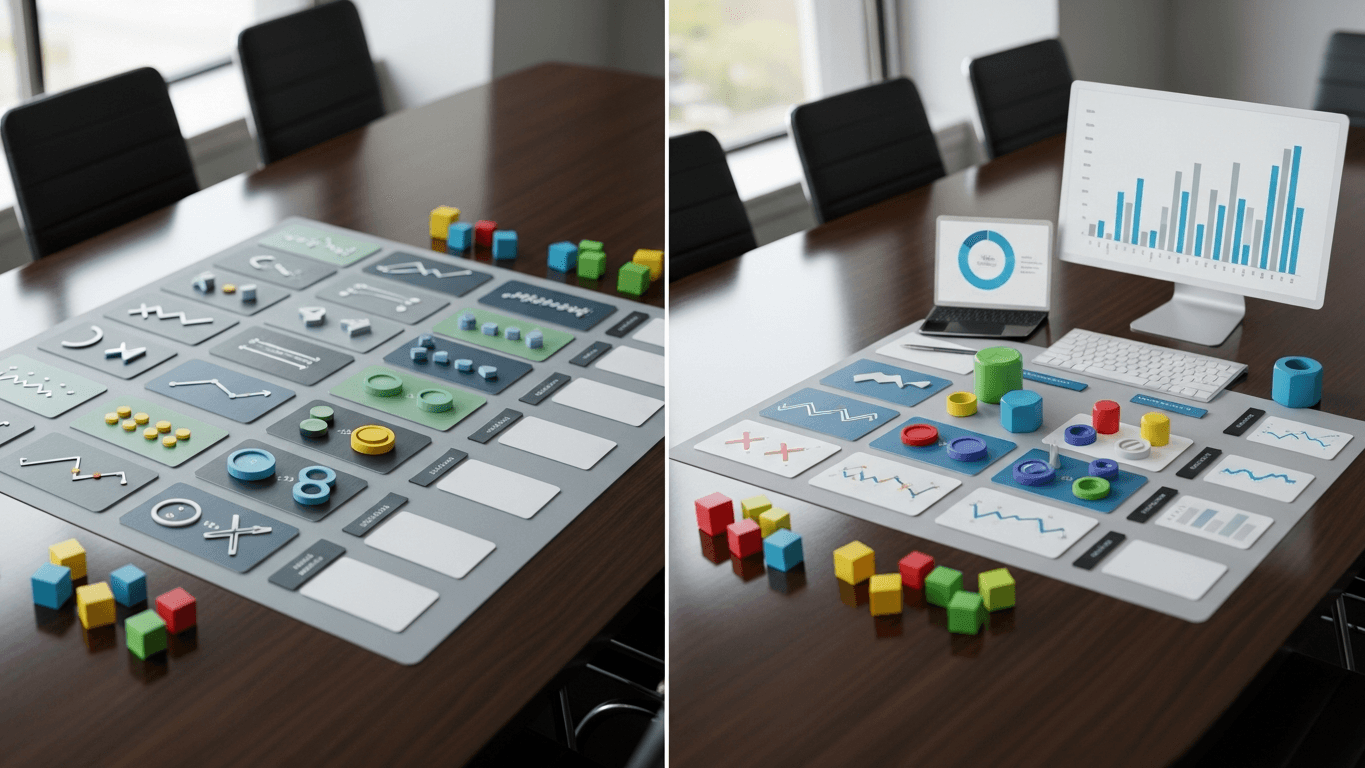
When to leave digital twin out
Healthy exclusions: the investment was never modeled as a flow or constraint decision; legal or contractual compliance is the sole agenda; data needed to refresh inputs will be unavailable for months and guessing will pollute the review; leadership wants a narrative win rather than a ranked set of corrective options. Skipping the twin here is discipline—not failure.
Review intent versus tool fit
Verify thesis versus floor reality or compare as-built to approved scenarios—high fit. Explain schedule slips without flow logic—low fit unless tied to throughput. Pure financial variance—low fit unless throughput and service tie to the variance story.
Minimum inputs for a credible PIR twin pass
Dated baseline scenario IDs from approval; as-built footprint and routing changes documented; actual ramp curve or order backlog behavior for the period; staffing and shift model as run—not as planned; supplier and inbound behavior updates with evidence-grade labels.
From comparison to commitment
Simulation quality is not measured by how polished the scene looks; it is measured by whether a responsible executive can commit with a downside story they are willing to own. That requires frozen option sets, honest ranges, and stress paths that include the weeks nobody wants on a chart. It also requires a written trigger for partial reruns when scope shifts before spend lands.
If your organization struggles here, the fix is usually social, not technical: name the standard pack, refuse bespoke optimism per option, and publish kill notes when paths fail. Carry fewer, stronger scenarios into execution. The factory will still be hard; the difference is that you rehearsed the hard parts before concrete hardened them.
Tie the story to what the floor can observe
Scenario outputs become operational when they reference behaviors people can see: where queues form, how staging fills, when overtime pressure shows up, which handoffs get brittle under mix shifts. If the narrative only speaks in abstract utilization, it will not survive first contact with a busy Tuesday. Translate the model’s language into walk-the-floor language before you ask teams to trust it.
That translation is also how finance and operations stay aligned. Cash and service effects should be traceable to those same observable behaviors, not only to a headline efficiency claim. When those links are explicit, governance gets lighter because everyone is arguing about the same mechanisms—not about competing metaphors.
What DBR77 Digital Twin adds
DBR77 Digital Twin carries scenario IDs and stress logic forward so post-investment reviews test thesis drift against the approval baseline instead of restarting from memory.
Bottom line
Use the twin when the funded story was operational. Skip it when the review is not about flow, constraints, or scenario truth.
DBR77 Digital Twin helps teams reconnect post-investment reviews to the same stress logic and scenario IDs used at approval. Book a demo or Explore Digital Twin.
Want to see Digital Twin on your scenario?
Book a short demo — we'll show the fastest path to decision-grade outcomes.