Design a new facility in 3D, then test it in motion.
Compare layout variants faster than static CAD and validate scale, flow, and constraints before CAPEX is committed.
Why this matters
Typical pains
A clear view of what breaks in the real world, so the model is built for what actually happens.
Static 2D layouts hide flow issues until it’s too late.
Decisions are negotiated by opinion instead of scenarios.
Late changes cause delays and expensive rework.
Outcomes
What improves
A measurable way to evaluate scenario variants and the decisions you will make.
Decision cycle
shorter with 3D alignment
Risk
reduced via scenario variants
Stakeholder clarity
higher via VR reviews
Deliverables
What you get
A decision-ready package: model, scenarios, and an actionable rollout path.
Deliverables
- 3D facility model with zones and assets
- Animated flow narrative for workshops
- Simulation variants for layout and resource options
- VR validation for leadership and operators
Recommended capabilities
Start with the minimum set needed for the outcome, then add more data as the use-case matures.
Proof
Case studies
Real scenarios, shown in full under this use case.
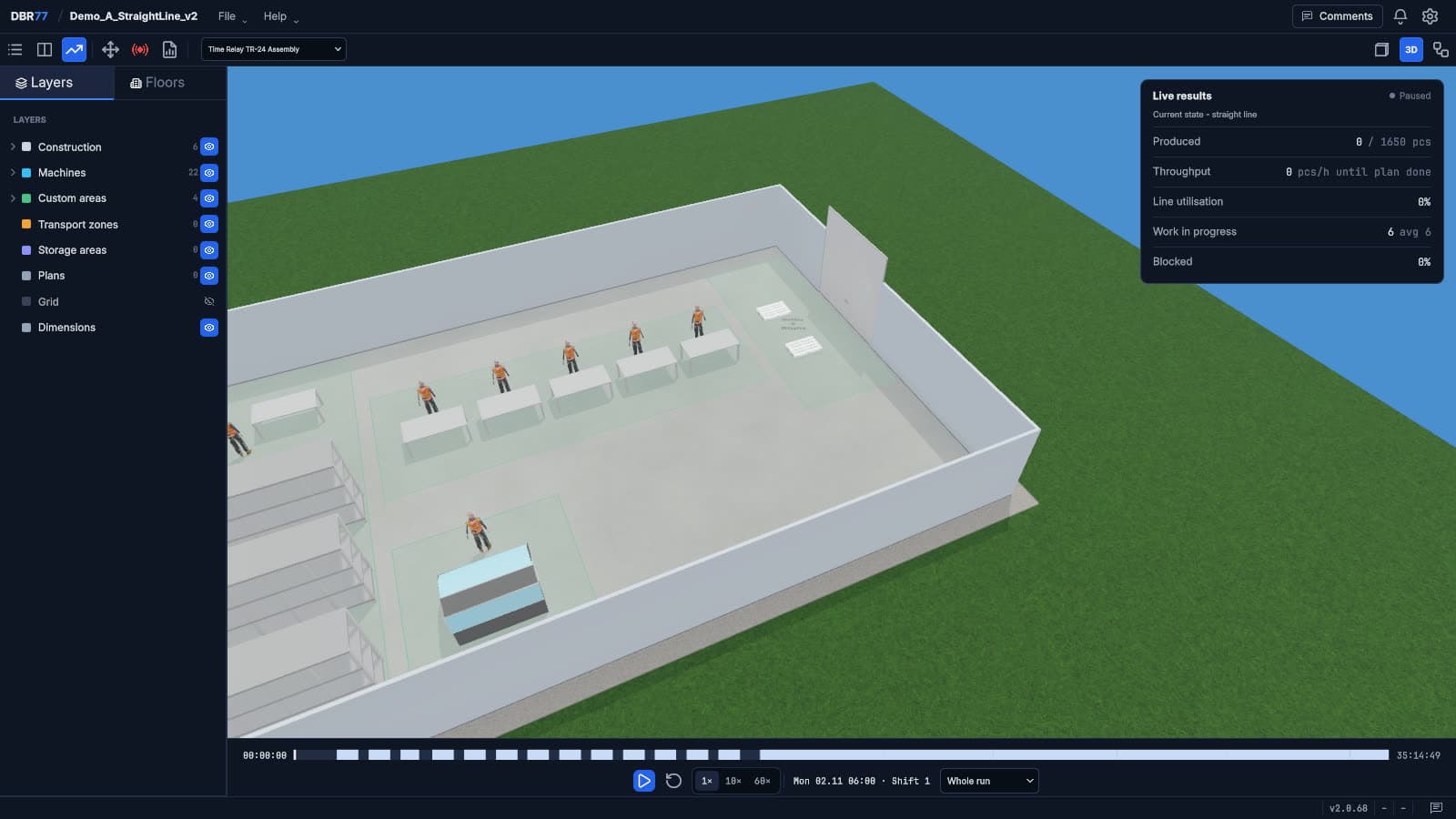
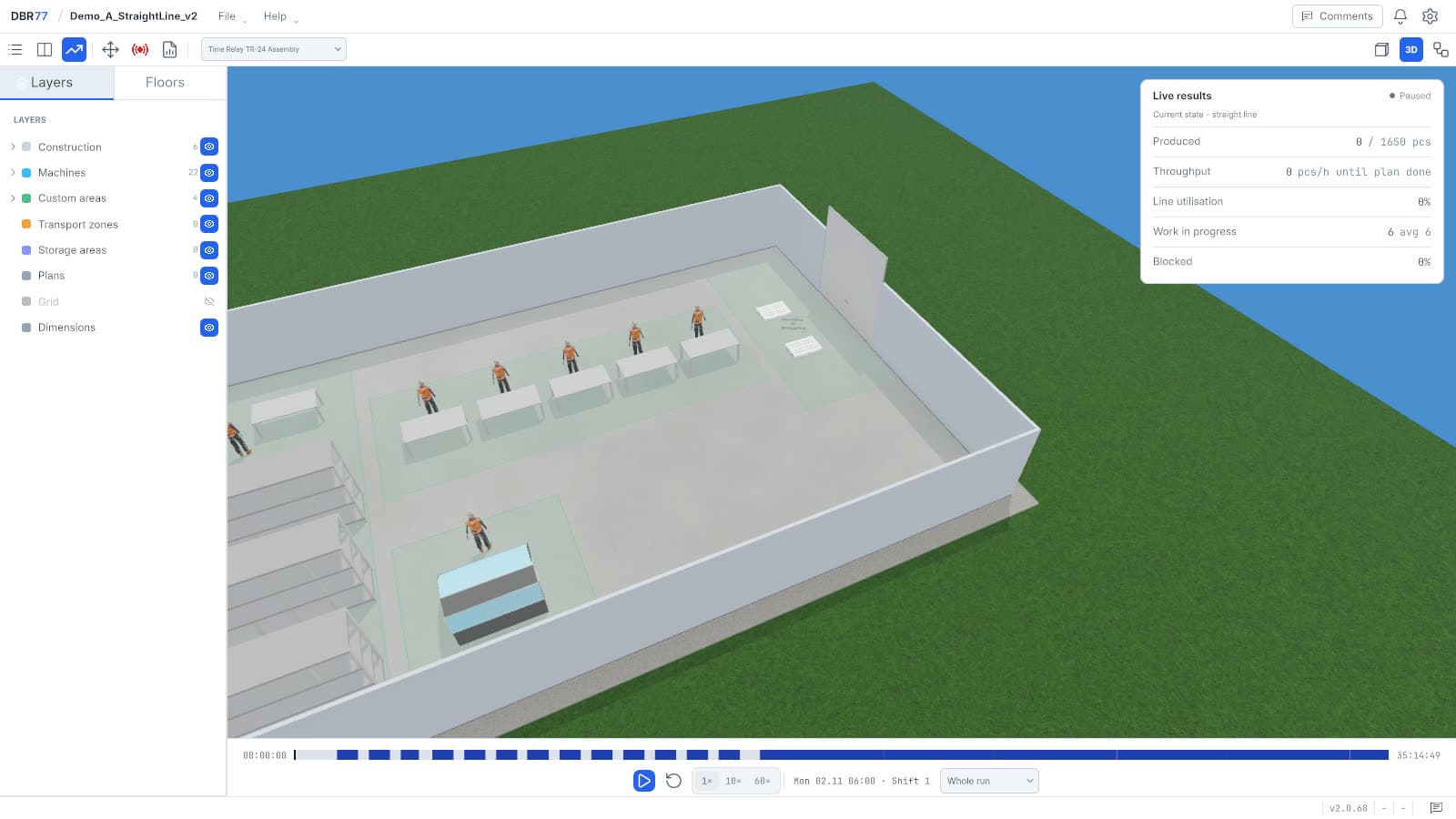
Car lamp manufacturer, southern Poland
Production line design: 6% more output per day
Context
A plant that makes lamps for passenger cars, with 270 people on two shifts. Its processes are injection molding, painting, electroplating, assembly, labeling, quality control and packaging. The building has 28,000 m² and the warehouse 12,000 m².
Task
Design a new production line layout with the best throughput and labor efficiency. The analysis had to include the time material spends moving between workstations and intermediate warehouses, the average production time and the line output per hour.
Work
- Built a digital twin of the material flow.
- Set the working times of the workstations from the times in the project.
- Set standard speeds on the transport routes, including braking and acceleration of the trucks.
- Defined animation paths for the whole material flow.
- Prepared assumptions for three layout variants and compared material flow times and output.
Results
- The best layout placed the buffer warehouse in the middle, between production and assembly.
- Its average material flow time was not the shortest, but daily output was on average 6% higher than in a linear layout without an intermediate warehouse.
- The other layouts lost output because semi-finished parts waited to be picked up between processes.
Benefits
- A multi-variant analysis of the line before any change on the floor.
- The analysis covered both material flow and production capacity for the planned order mix.
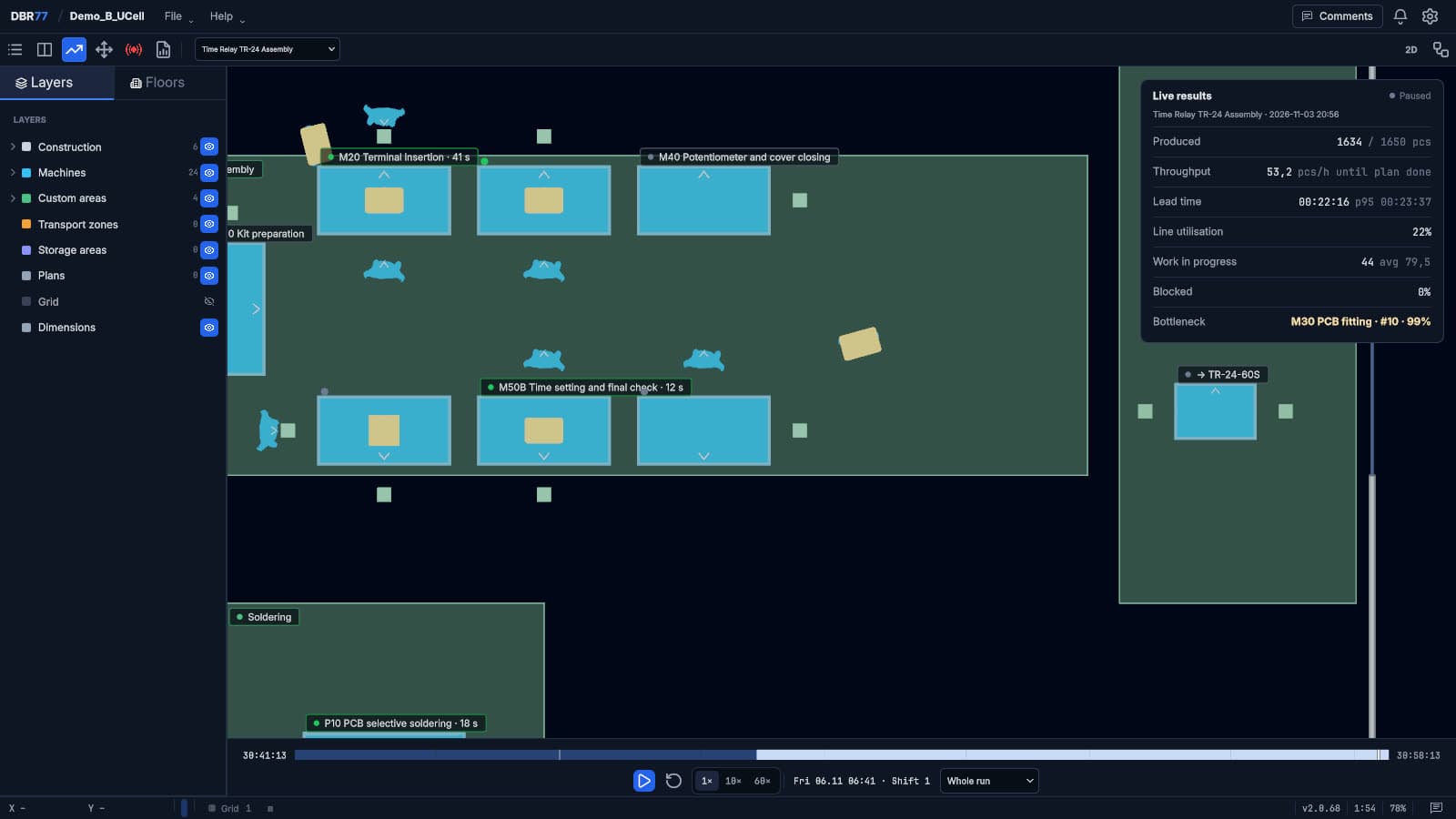
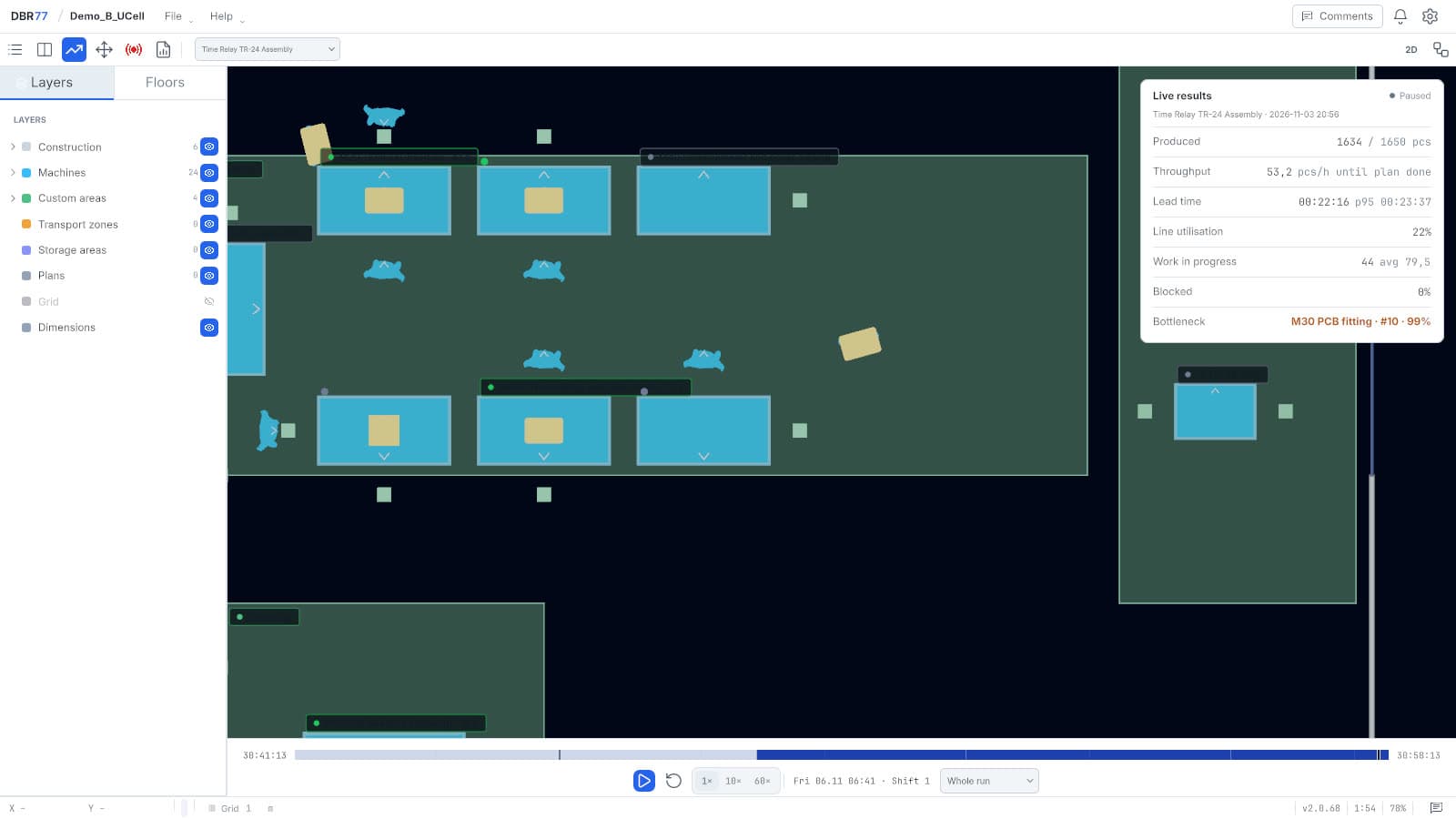
Car lamp manufacturer, southern Poland
Plant expansion: moving machines without stopping production
Context
The same car lamp plant as in the production line case: 270 people on two shifts, a 28,000 m² building and a 12,000 m² warehouse. A new production hall was added to the plant.
Task
Plan the gradual move and set-up of machines so that production continues without a break. Also check the capacity of the intermediate storage areas and the continuity of internal deliveries.
Work
- Added the newly built area to the digital twin.
- Built the material flows with the process times of each task.
- Used process animation to choose the order of the moves.
- Analyzed production and material flow for each relocation option and chose the next process to move.
- Started the new area in Animation Mode and checked the assumptions.
Results
- A plan that keeps production at the required level during the expansion.
- The main question was where the storage areas between processes should be and how large they should be.
- The simulation showed that longer transport routes were the main cause of production losses.
Benefits
- An order of machine moves that runs processes in parallel.
- The final machine layout changed compared with the starting assumption.
- The management board watched the animations in VR goggles and decided faster on the order of the moves.
Next step
Have a decision to test?
Describe your layout and the decision you are weighing. A DBR77 expert will show you how to test it on the digital twin, starting from the data you have.
Sign in or sign up at studio.dbr77.ai.