Articles for engineers, plant managers and finance
How to use simulation and a digital twin for layout, capacity and investment decisions, with examples from DBR77 projects.
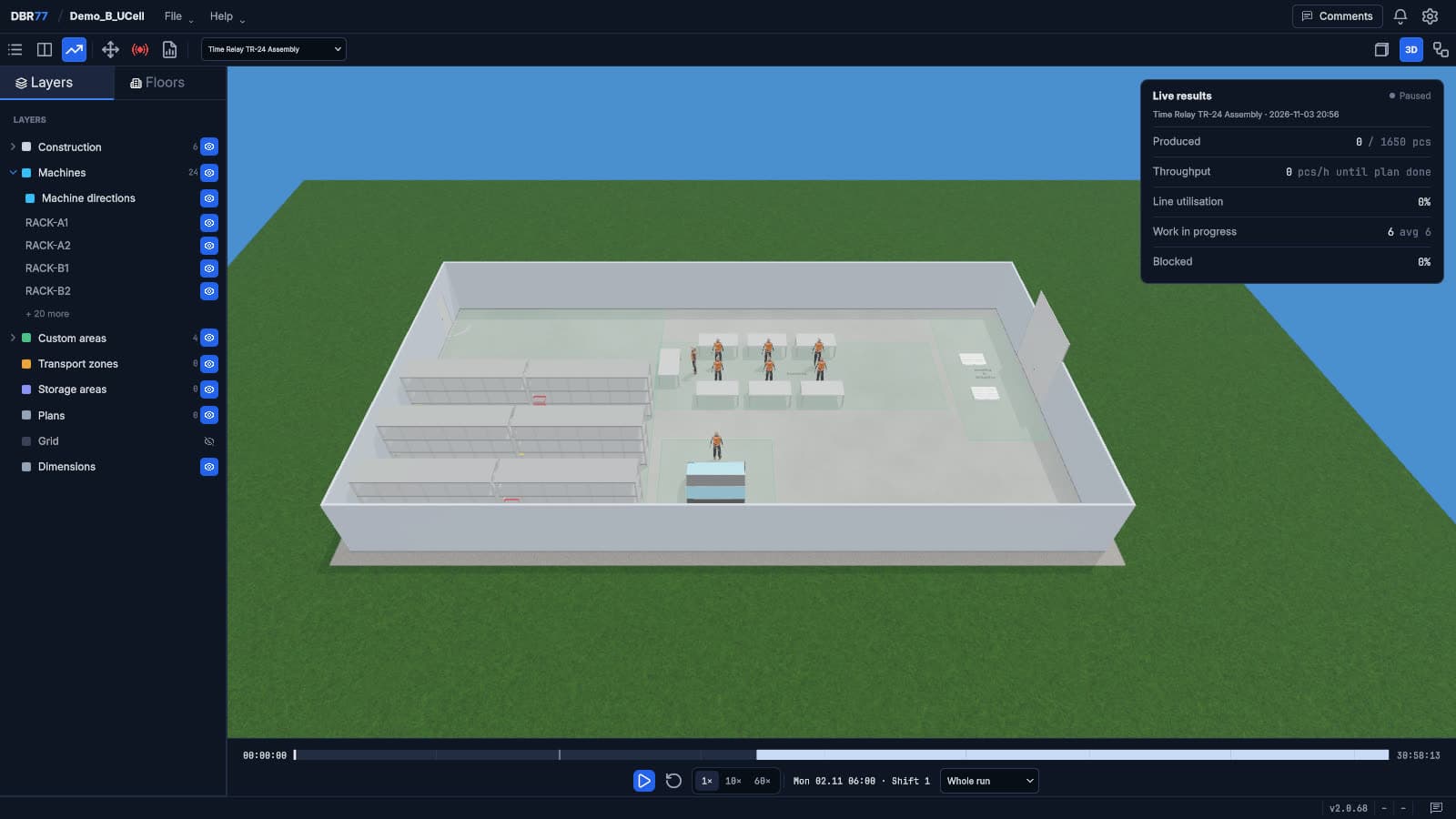 Rollout and data8 min read
What a Digital Twin in Manufacturing Really Is (and What It Is Not)
A digital twin in manufacturing is a model of your plant that runs production over time, so you can test a layout, robot or shift change first.
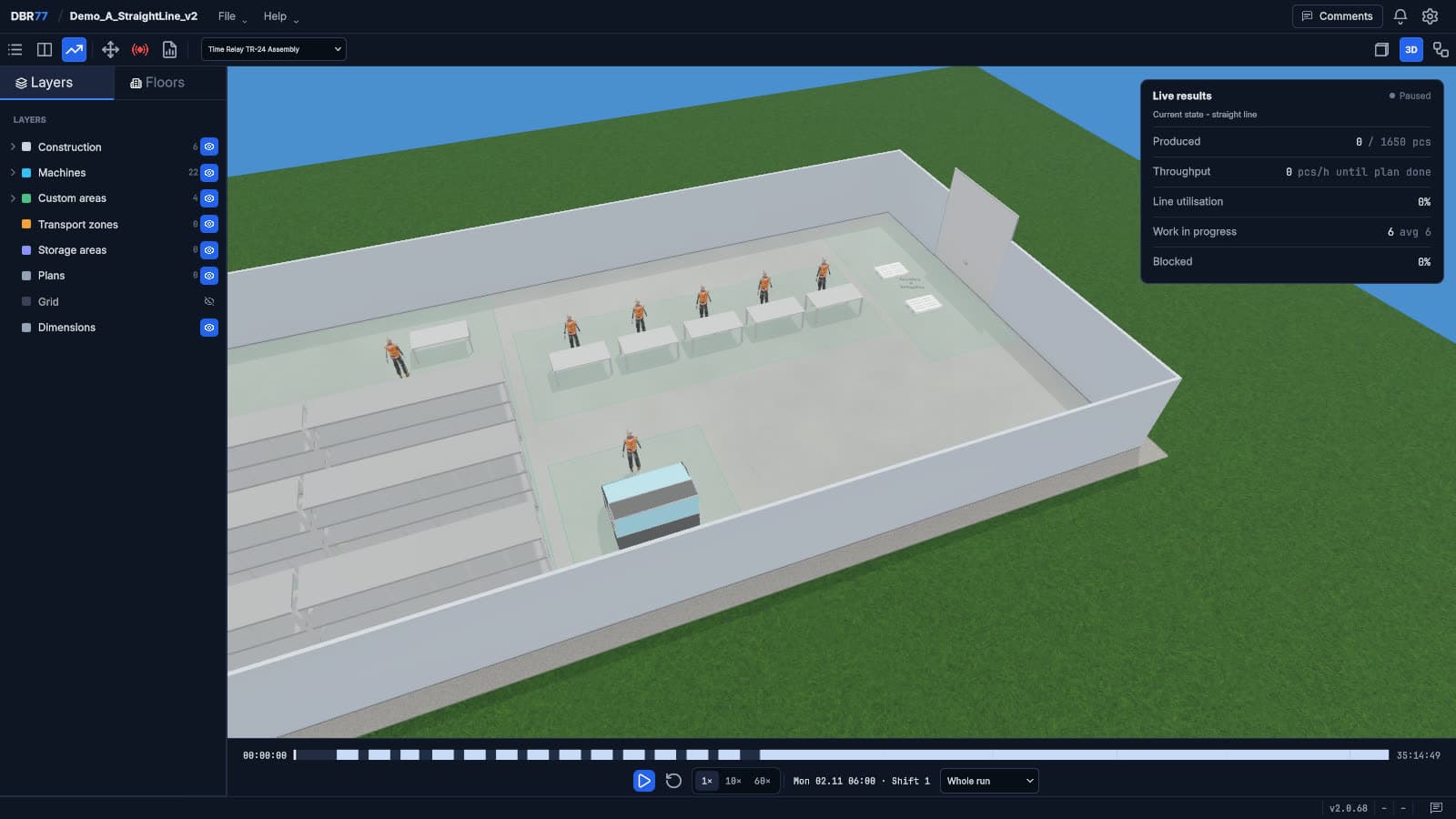 Layout and throughput8 min read
Digital Twin vs CAD vs Simulation Software: Which Answers Which Question
CAD shows if a layout fits, simulation shows how it runs over time, a digital twin keeps that answer current for your plant. When to use each one.
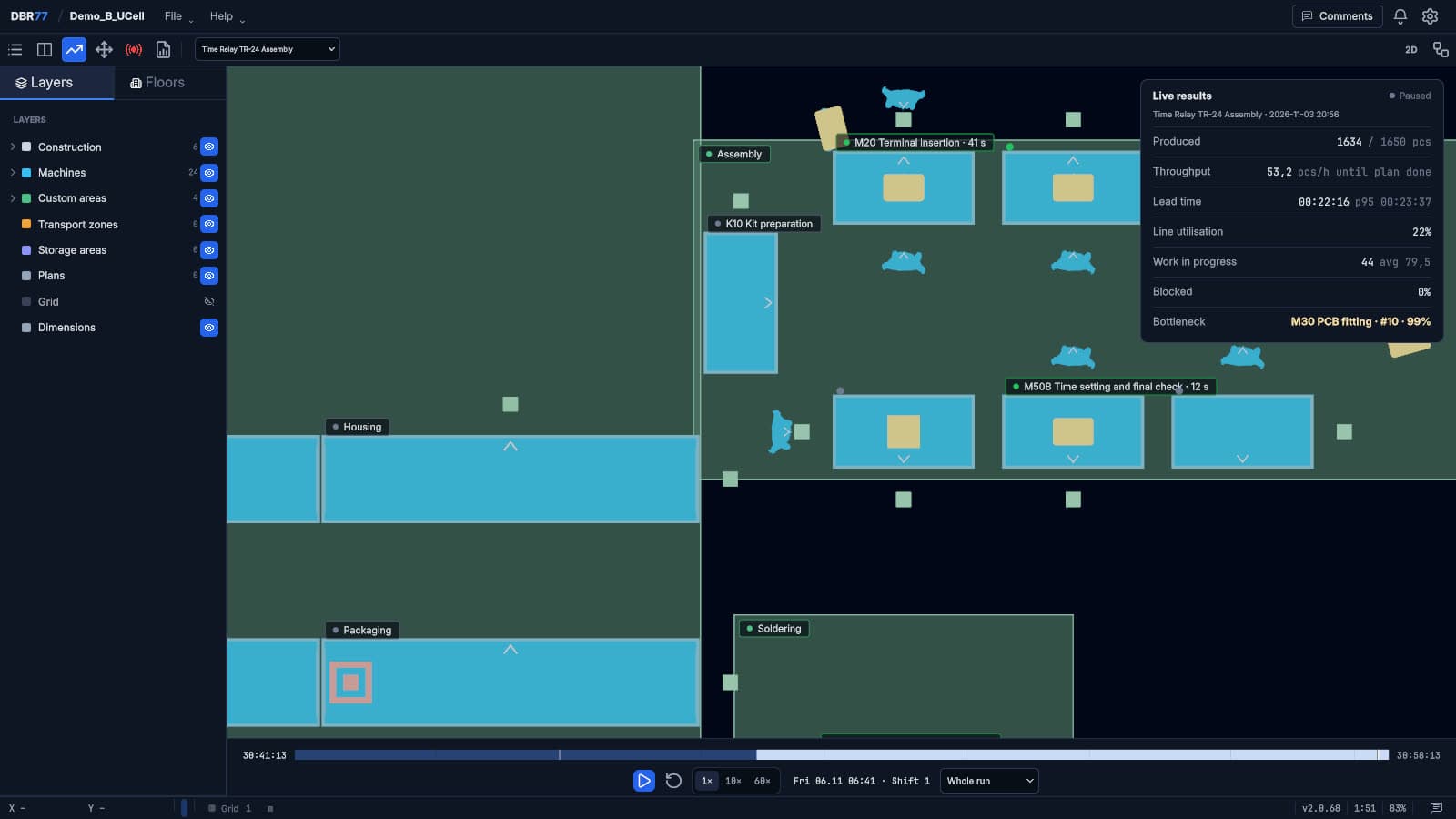 Rollout and data8 min read
Why Most Digital Twin Projects Fail, and How to Avoid It
Digital twin projects rarely fail on technology. Five causes, from no clear decision to no model owner, and how to avoid each one before you start.
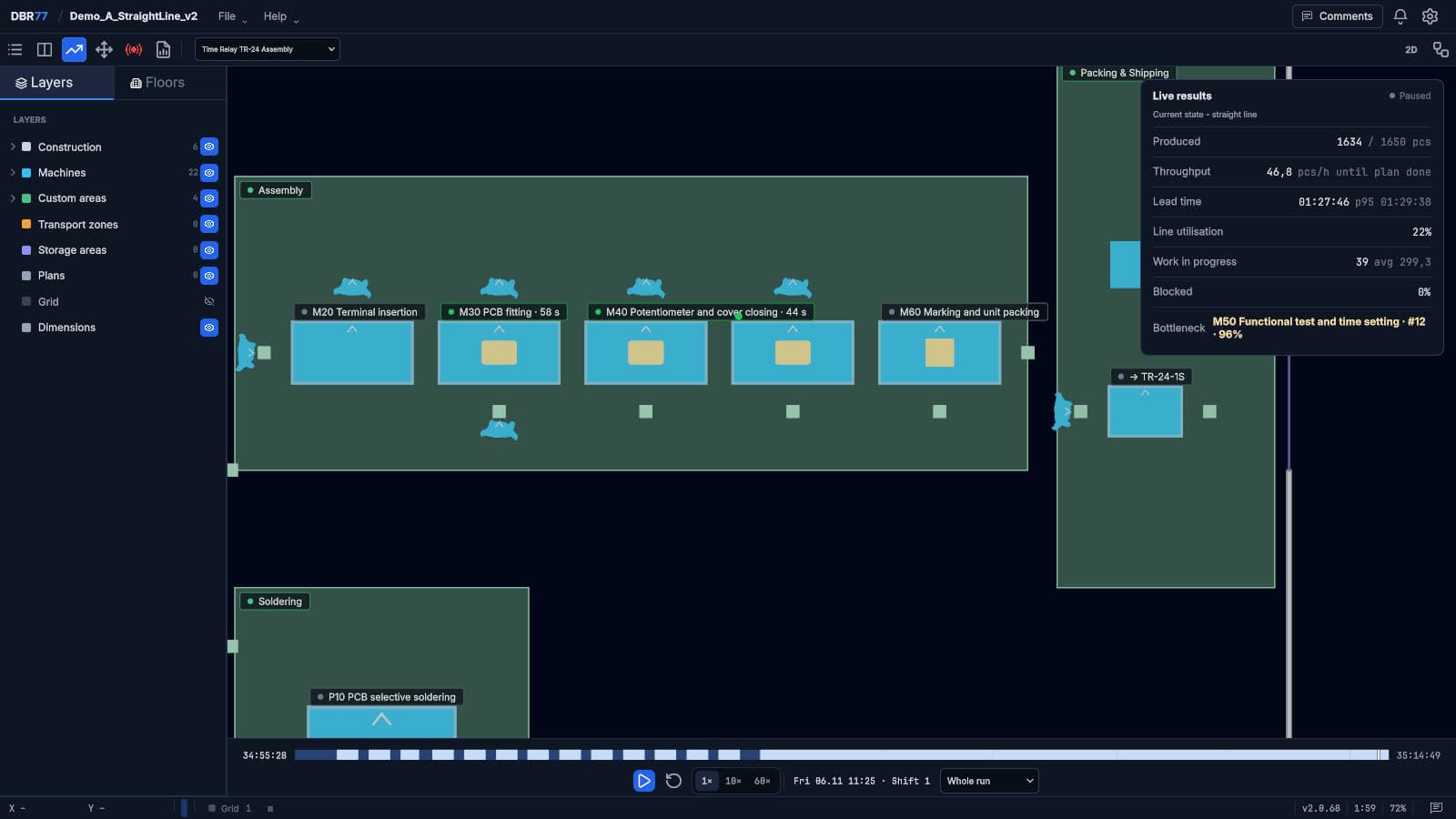 Simulation and bottlenecks7 min read
5 Factory Decisions You Should Simulate Before You Commit
Layout changes, bottleneck fixes, robots, capacity and shifts: five factory decisions to simulate before you commit, and what to compare in each.
 Simulation and bottlenecks8 min read
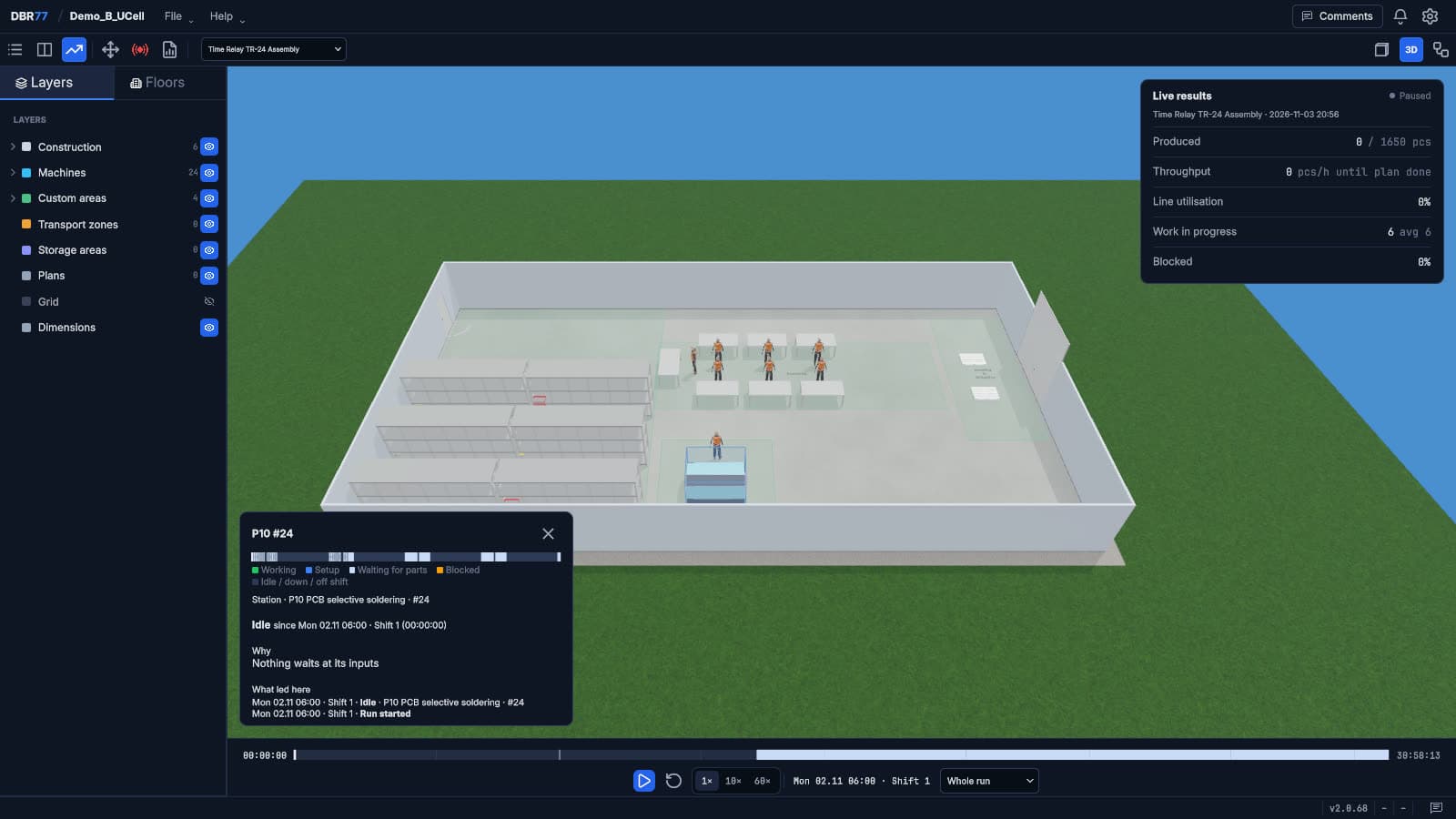
How to Find Production Bottlenecks Before They Happen
Find production bottlenecks before go-live: run the line in simulation, read queues and waiting, test a fix and see where the constraint moves next.
 Layout and throughput7 min read
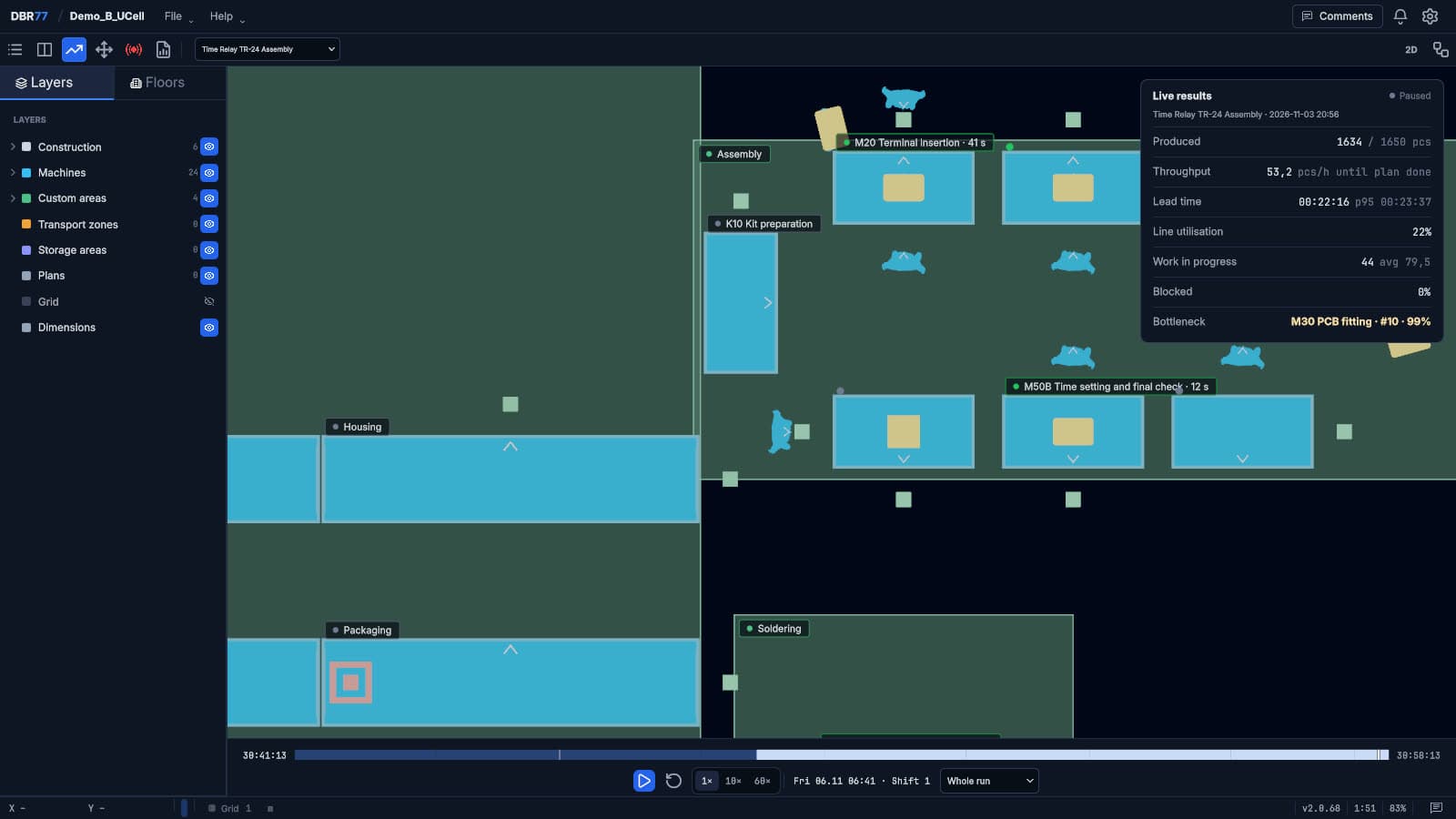
How to Compare Layout Variants Without Guesswork
Compare factory layout variants in one simulation model, with the same order mix, rules and measures, so the choice rests on output, not on drawings.
 Layout and throughput8 min read
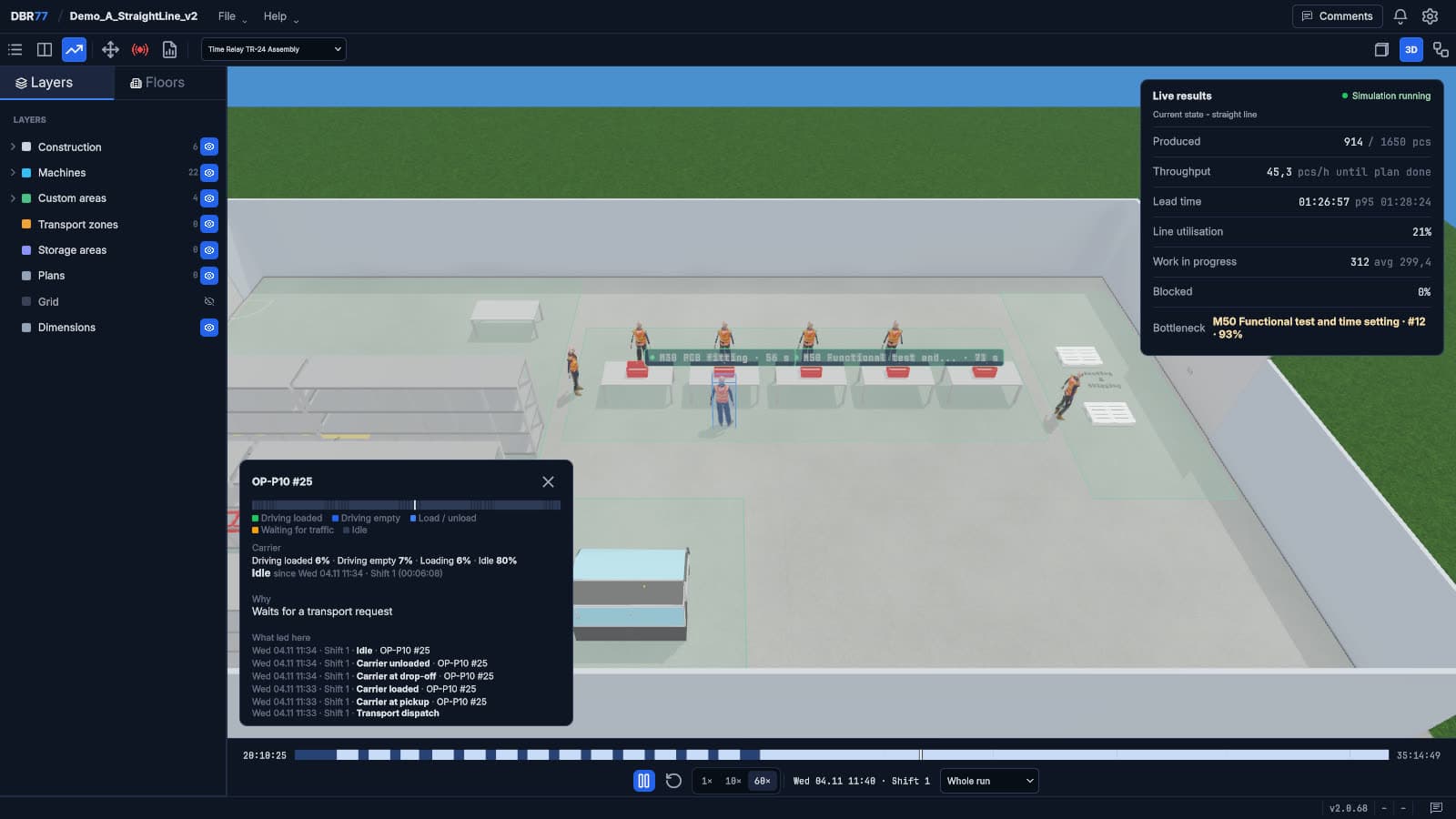
Before You Buy a Robot, Simulate It First
A robot raises output only if the line lets it. Check the cycle target, find the real bottleneck and compare automation variants before you buy.
 Simulation and bottlenecks8 min read
How to Test Capacity Before the Next Demand Shift
Run each capacity option through level, mix, peak and ramp scenarios in a simulation and choose the one that holds up when the forecast is wrong.
 Rollout and data8 min read
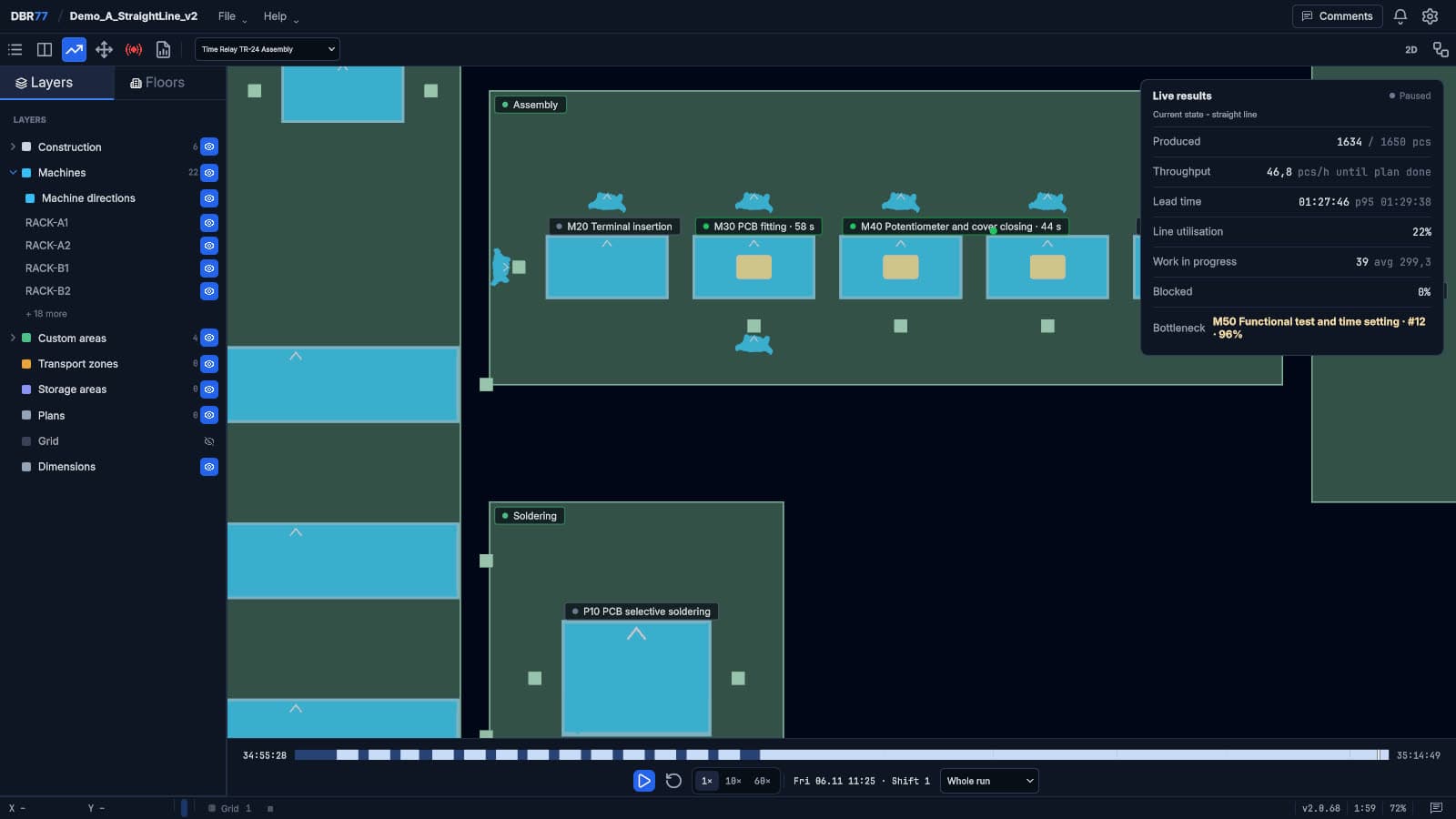
What Data Do You Need to Start a Factory Simulation?
The minimum data set for a first factory simulation, where each item lives in your plant, and how to collect the missing parts by hand.
 Simulation and bottlenecks8 min read
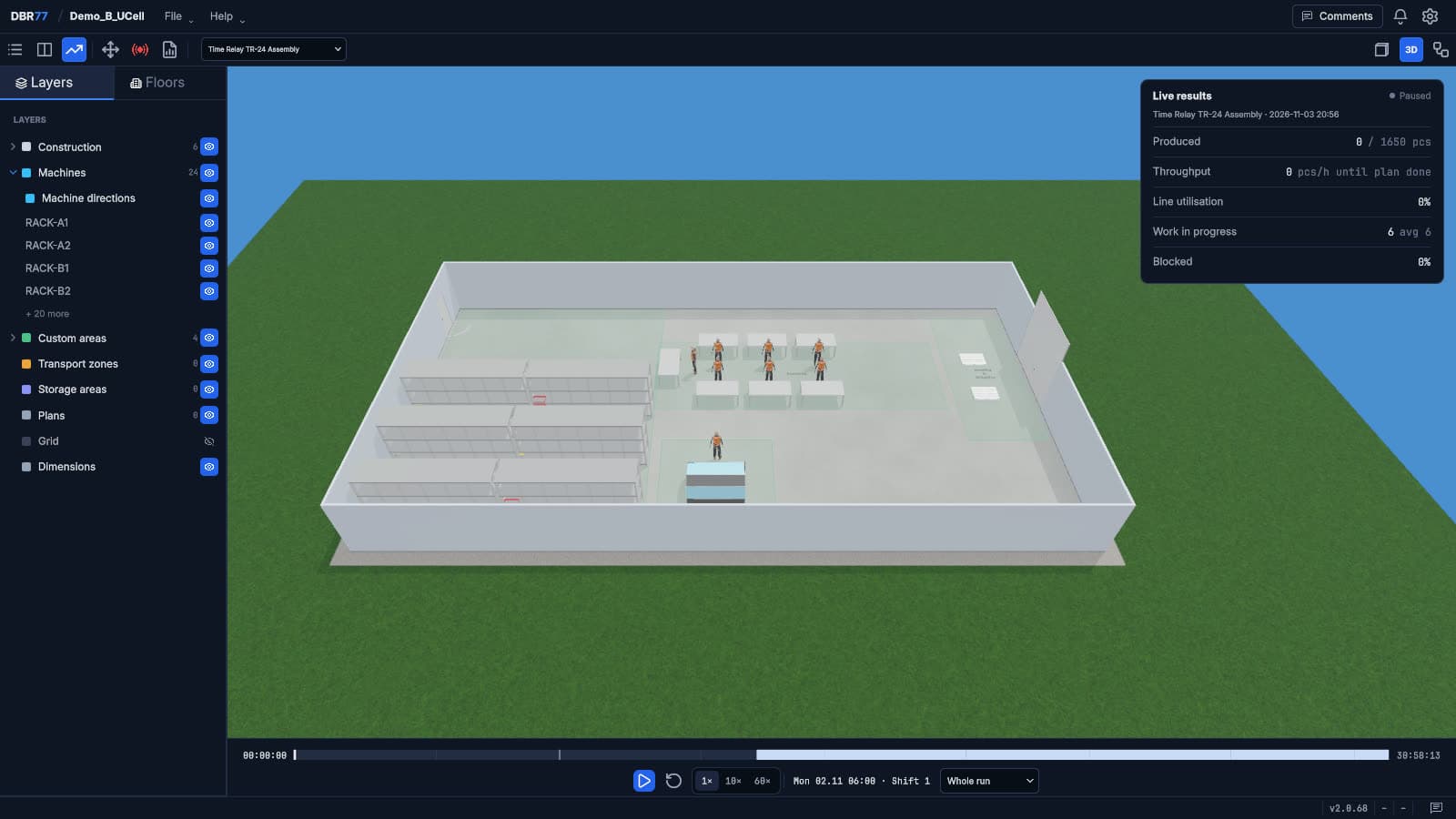
How to Run Your First Simulation Project
Six steps, the roles and a clear scope for a first factory simulation project that ends in a decision, not in a model nobody uses.
 Layout and throughput8 min read
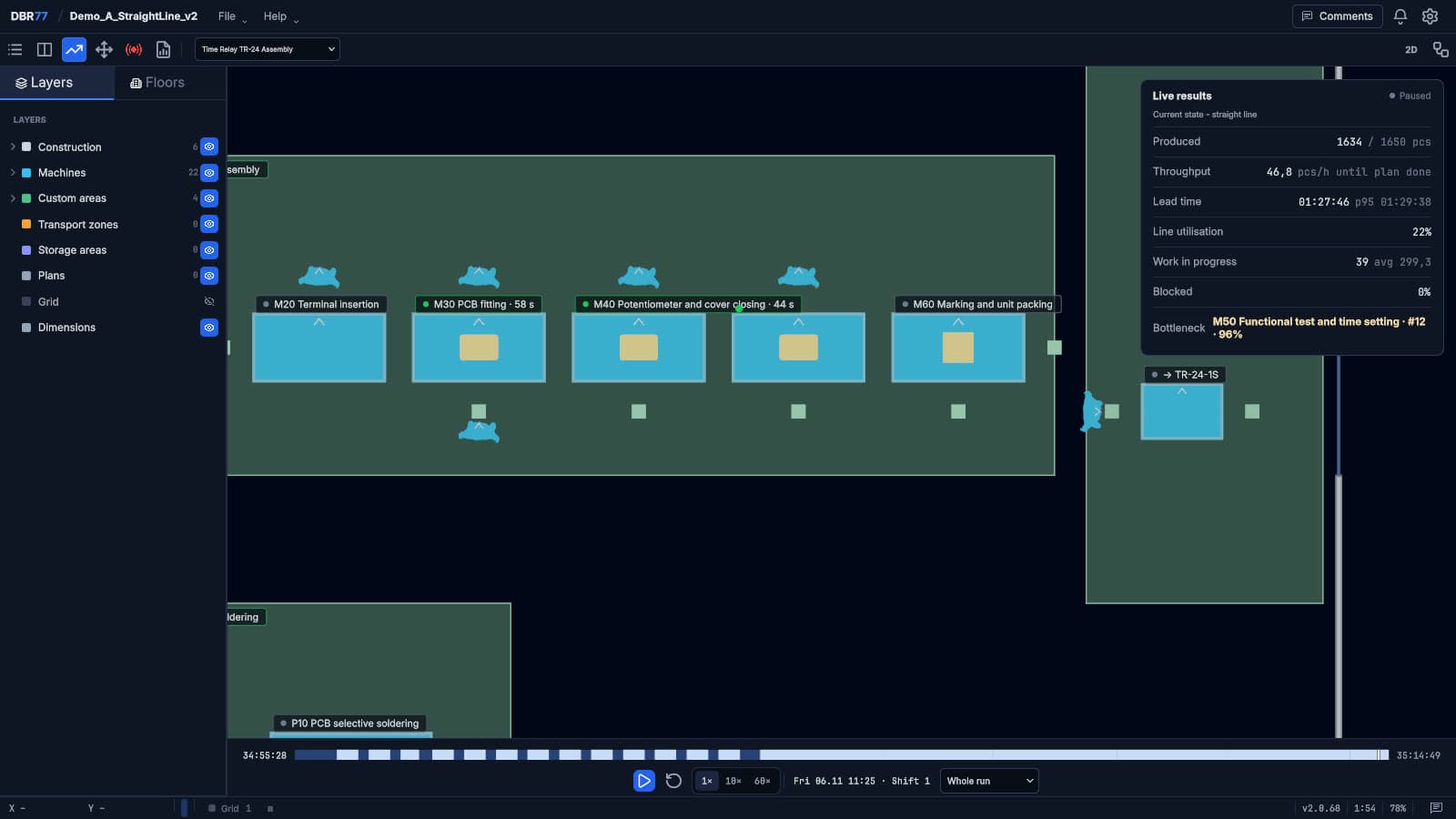
How to Simulate Intralogistics and Material Flow
Model routes, forklifts, autonomous carts and buffers to see where parts wait before you change a layout. What to include, with two real cases.
 Layout and throughput8 min read
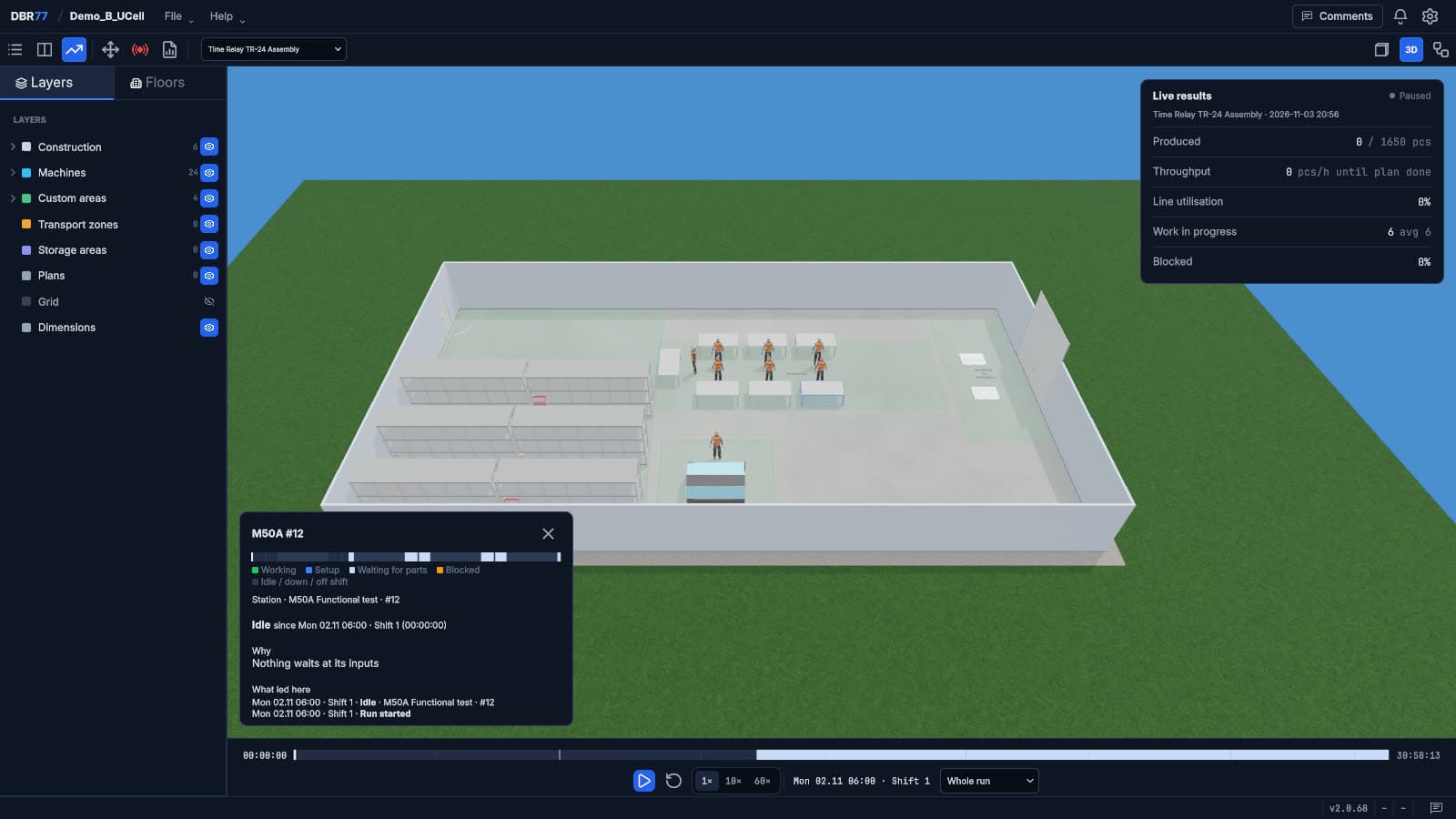
How to Plan Brownfield Changes Without Stopping Production
Test each stage of a rebuild in a digital twin: order of moves, detours, buffers and output per week, so the plant keeps shipping during the change.
 Simulation and bottlenecks10 min read
How to Use a Digital Twin to Test Shift and People Decisions
Run the production plan against your shift calendar and see the bottleneck and on-time delivery. Your team decides headcount.
 Investment decisions (CAPEX)8 min read
How to Build a Digital Twin Business Case
Build a digital twin business case a CFO can check: one decision, real costs from past projects, a break-even threshold instead of made-up savings.
 Investment decisions (CAPEX)8 min read
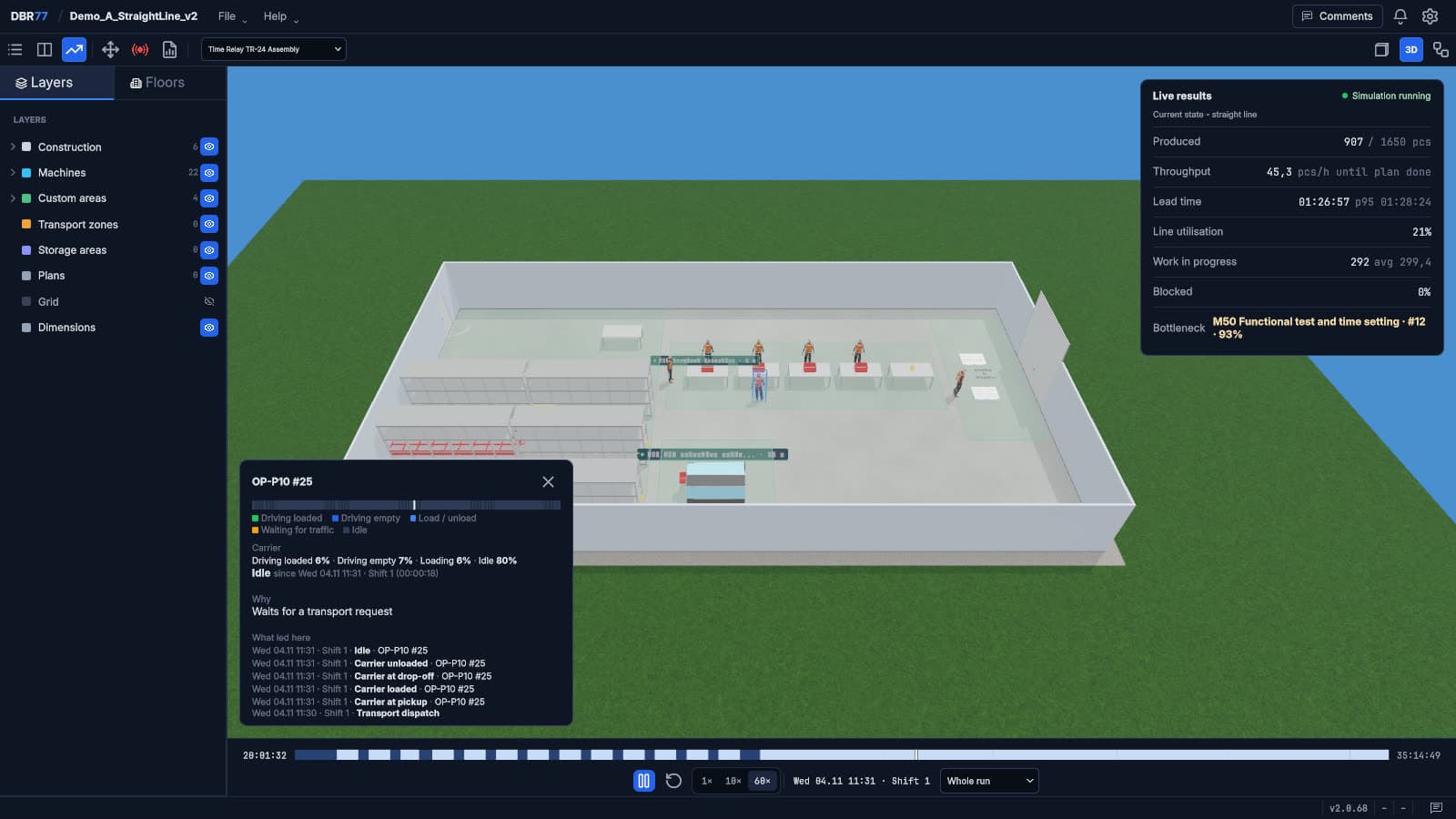
How to Compare CAPEX Options When Every Scenario Looks Plausible
Run every CAPEX option through the same bad weeks, score output, waiting, inventory, cash timing and reversibility, and retire weak options early.
 Investment decisions (CAPEX)10 min read
What a Sensitivity Analysis Should Show Before Approval
Run variants with fixed assumptions, such as a slower station or a shorter shift, and show throughput, on-time delivery, bottleneck shift and break-even.
 Simulation and bottlenecks8 min read
How to Compare Resilience, Not Just Throughput
Run every option through the same slower stations, late material and demand peaks, then compare throughput retained, on-time delivery and bottleneck shift.
 Investment decisions (CAPEX)7 min read
How to Present Simulation Results to the Board
Turn factory simulation results into one page the board can decide on: decision, options, scenarios, trade-offs, owners and a 30-minute agenda.
 Rollout and data8 min read
When to Connect a Digital Twin to Live Data, and When Static Data Is Enough
Connect a digital twin to live data when you decide from it weekly and inputs drift fast. For layout and investment decisions, static data is enough.
 Rollout and data8 min read
Who Should Own the Digital Twin Model?
Split digital twin ownership: engineering owns the logic, operations the floor data, finance the assumptions, and a model steward keeps it current.
 Investment decisions (CAPEX)8 min read
How to Turn a Digital Twin Into a Repeatable Decision Process
Keep a scenario library, an assumption register and post-investment reviews, so each layout or CAPEX decision reuses the model, not a blank sheet.
Digital Twin newsletter
Short notes on testing layout and flow decisions on a model, and news from DBR77 Digital Twin. You can unsubscribe at any time.
Questions
Have a question about this topic?
Tell us what it is about. We will reply within one business day.