The Digital Twin for manufacturing: design, optimization, and decision robustness.
Use a 3D, dynamic model of your factory to visualize, animate, and simulate real operations. Compare layout variants fast, include deviations from historical data, and de-risk change.
Core capabilities
Built to scale from greenfield to real-time operations
Start with 3D and simple inputs, then evolve to historical and live data as your use-cases mature.
3D Factory & Plant Visualization
Turn layouts, assets, and constraints into a shared 3D language—validated at 1:1 scale on PC, VR, or AR.
Process Animation
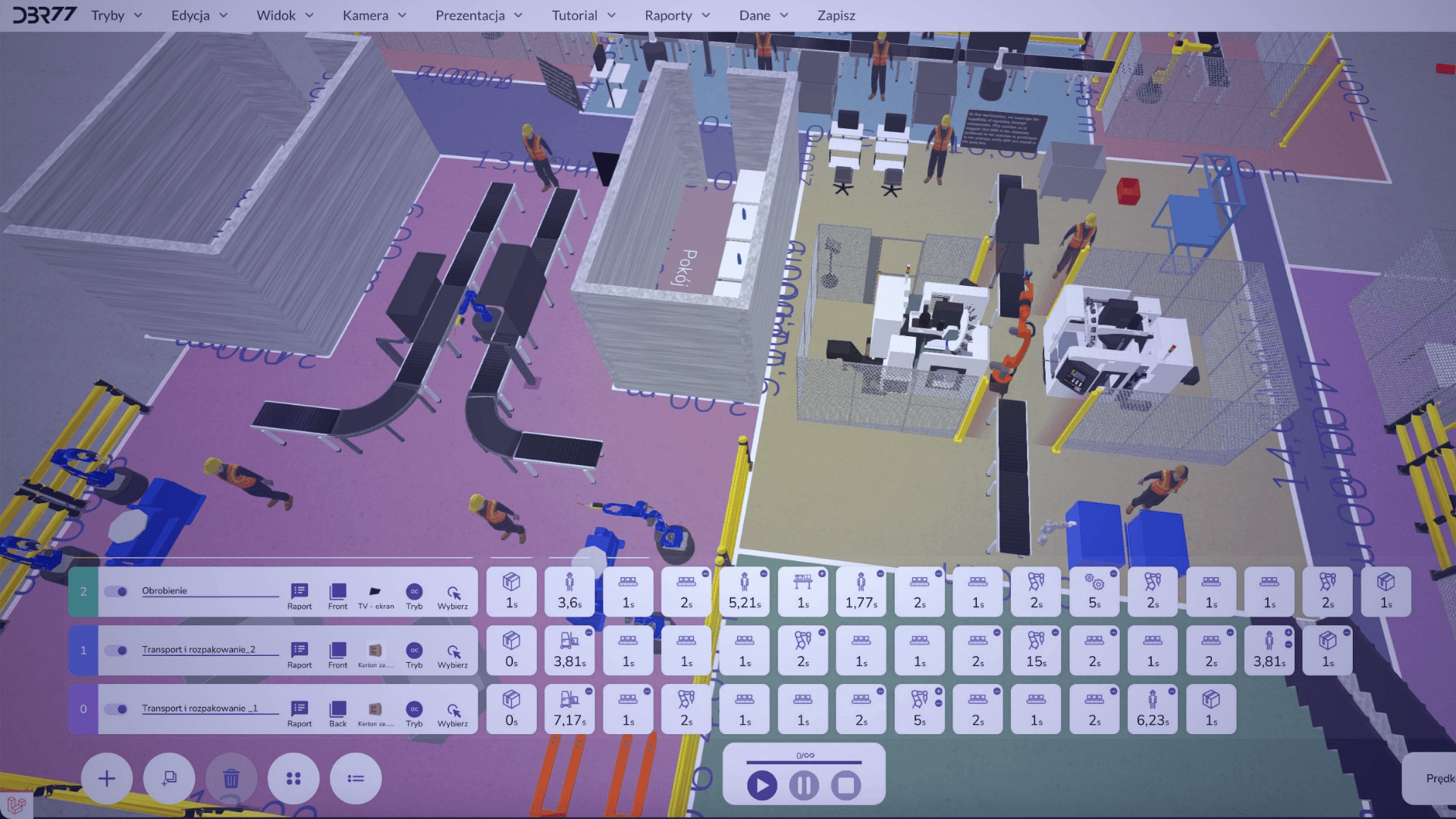
Show how material, people, and machines interact across layouts—so everyone understands flow before you execute change.
Production Process Simulation
Run stochastic, discrete-event simulations of your production processes using deviations derived from historical data—not ideal assumptions—to test throughput, bottlenecks, WIP, and lead time before you change the line.
Data & Integrations
Start from manual inputs, scale to historical imports, and connect live data via APIs/IoT—without a big-bang approach.
VR / AR
Walk the future facility at 1:1 scale. Validate layout decisions before you commit CAPEX or disrupt operations.
Showroom
Sell complex technology with interactive 3D demos—machines, lines, and scenarios—plus brochures, videos, and pricing.
Factory Layout Optimization
Compare factory and plant layout variants on measurable outcomes—throughput, travel distance, congestion, and utilization—so you optimize the floor before you pour concrete.
Key differentiators
Dynamic 3D + stochastic simulation
Two comparisons that quickly explain why this is a long-term decision platform, not just a 3D visualization.
2D CAD vs 3D Digital Twin (dynamic)
Static drawings don't show flow in motion. A DT adds behavior, scenario variants, and validation in VR/AR.
Deterministic vs stochastic simulation
Deterministic models optimize for ideal assumptions. Stochastic simulation includes deviations derived from history—so decisions survive reality.
Use cases
Where Digital Twin evidence changes the decision.
Explore scenarios that connect the Digital Twin platform to real planning, flow, capacity, and investment decisions.
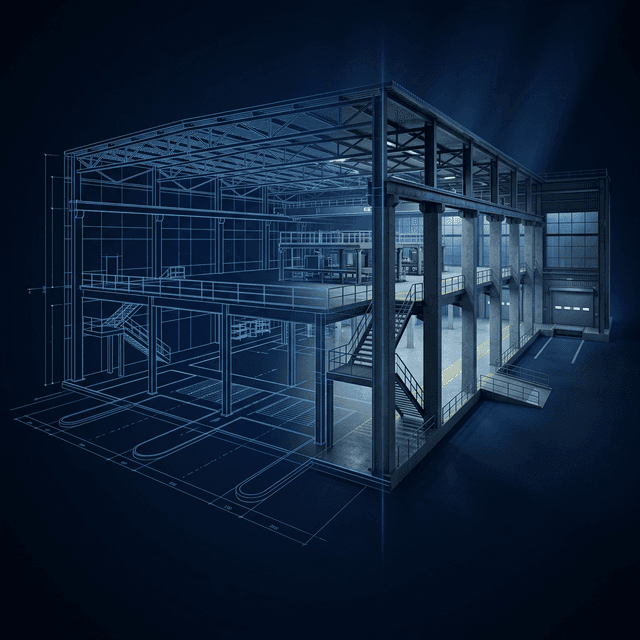
Greenfield
New facility or major expansion (Greenfield)
Compare layout variants faster than static CAD and validate scale, flow, and constraints before CAPEX is committed.
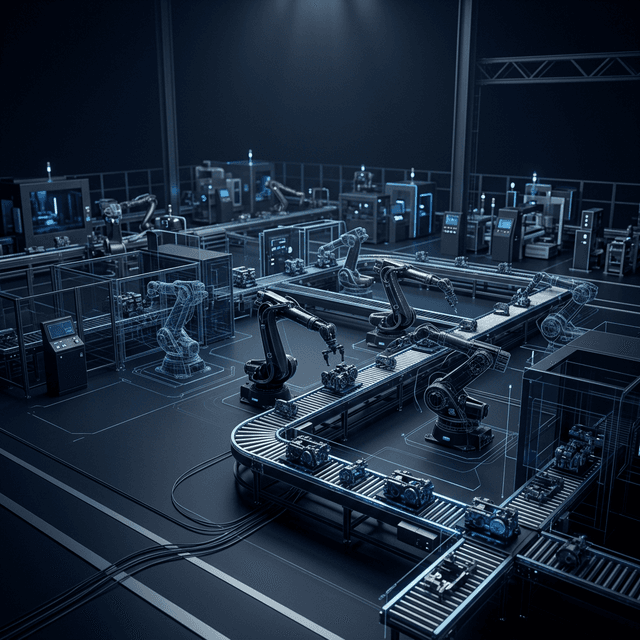
Brownfield
Layout change, relocation, or line rebuild
Plan the sequence of moves and validate constraints so you can execute changes with minimal downtime and stable delivery.
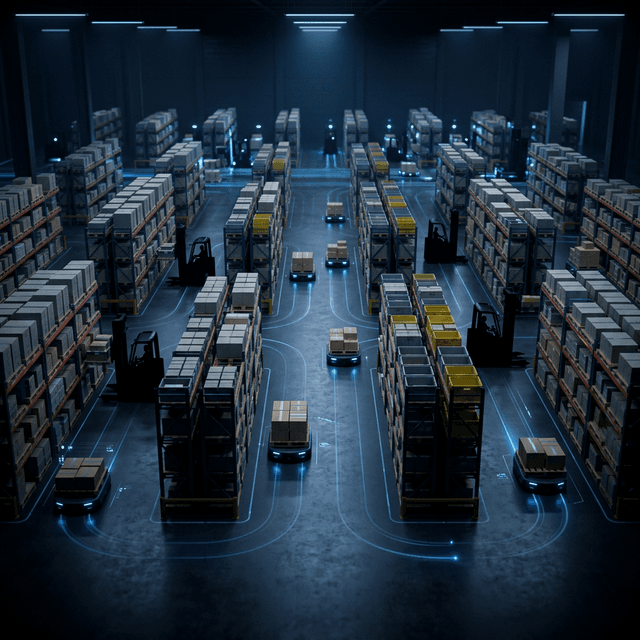
Logistics
Intralogistics (Milkrun + Kanban) under variability
Optimize replenishment and routes using deviations from historical behavior—then adapt plans when constraints change.
Knowledge base
Read the thinking behind decision-grade twins.
Use the knowledge base to understand when simulation evidence is strong enough to support operational and capital decisions.
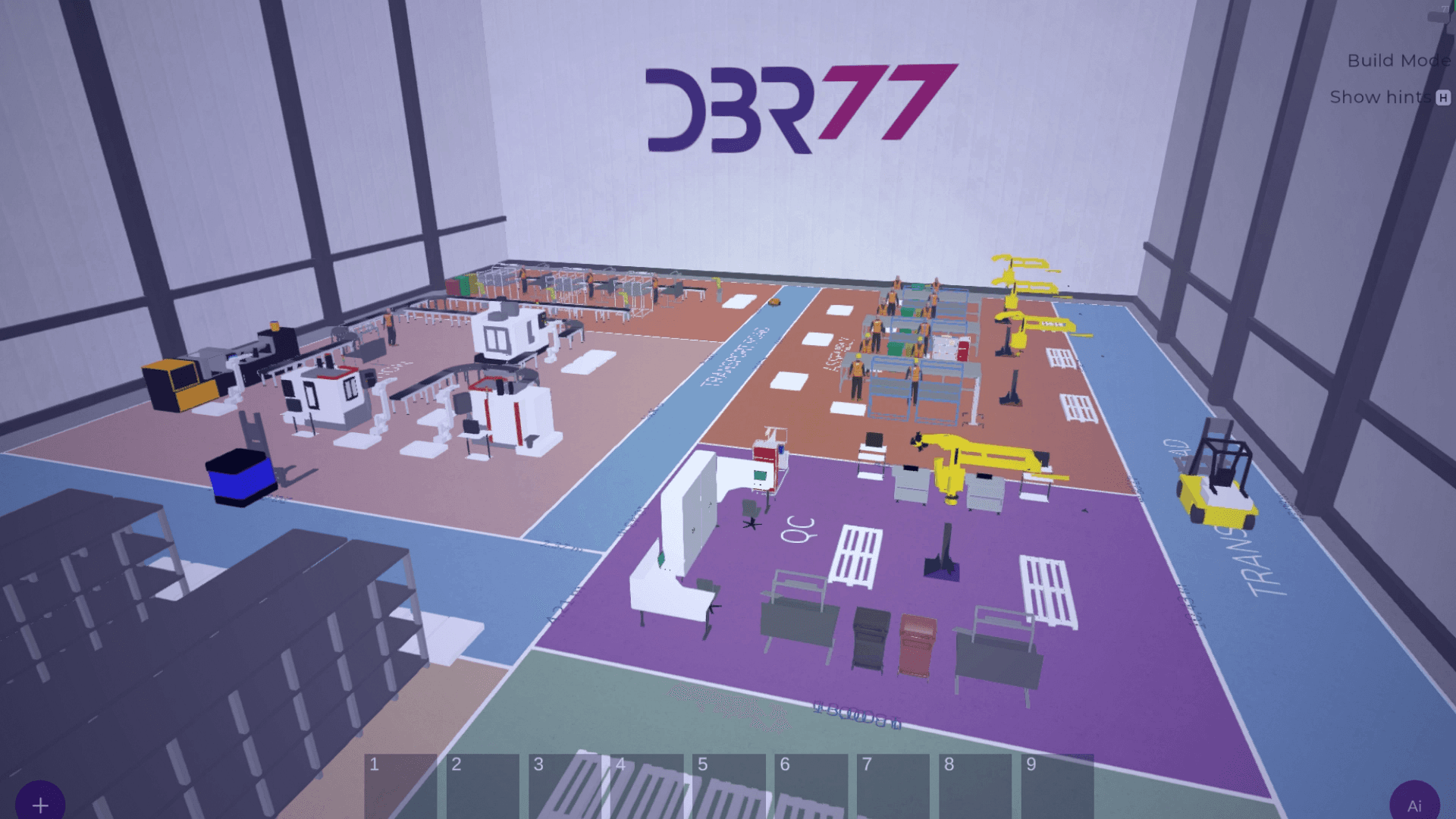
Digital Twin as a decision engine
Why the model matters most when it can test choices, constraints, and trade-offs before decisions are committed.
Simulate CapEx before approval
How scenario evidence reduces approval risk when investment options all look plausible on paper.
Before you buy a robot, simulate it
A practical argument for testing the surrounding process before automation equipment is purchased.
Start small. Scale fast.
Manual → Historical → Live data
You can create value before IoT is fully deployed. Build the model, calibrate with history, then connect live data where it matters.
Frequently asked questions
- What is a digital twin in manufacturing?
- A digital twin is a 3D, data-driven model of your factory and its processes. It lets you visualize, animate, and simulate operations so you can test changes and decisions before applying them on the floor.
- How is a digital twin different from a CAD drawing?
- CAD shows static geometry. A digital twin adds behavior over time—flow, queues, variability, and resource interactions—so you compare scenarios on measurable KPIs, not just appearance.
- Do I need live IoT data to start?
- No. You can start from manual inputs and historical data (e.g. spreadsheets), then connect live data later where it adds decision value.
- What decisions does a manufacturing digital twin support?
- Capacity and CapEx decisions, layout and flow changes, staffing and WIP, bottleneck removal, and ramp or expansion planning.